Who Really Owns Your Plane? Aircraft Leasing and Financing
Around half the world's airliners are leased. How leases and sale-and-leasebacks work, and why Ireland, Russia, Go First and GIFT City matter.

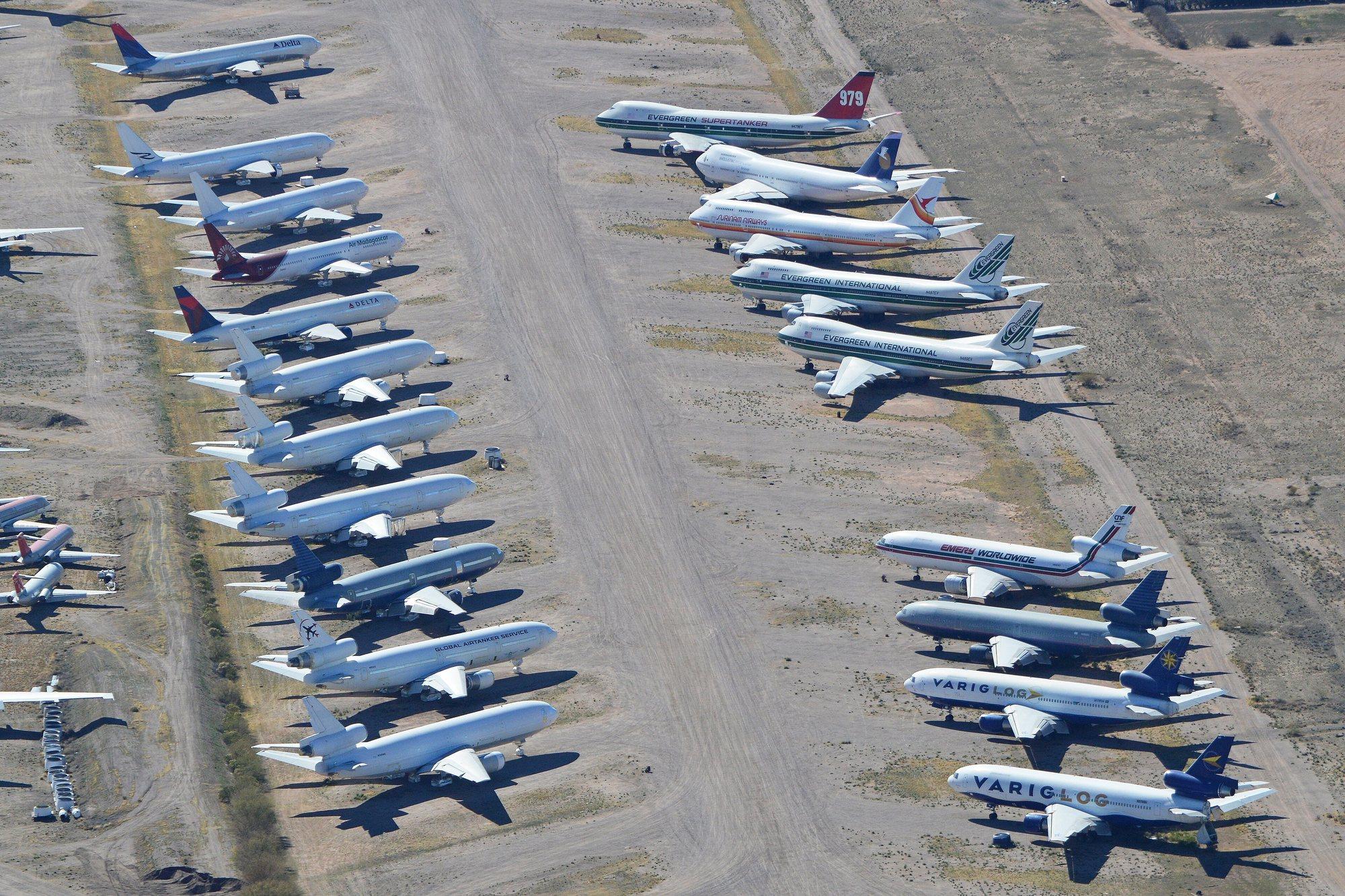
Photo: Alan Wilson · CC BY-SA 2.0
On this page
The airline logo on the tail tells you who sells your ticket, flies the aircraft and employs the crew. It very often does not tell you who owns the plane. Around half of the world's airliners belong to leasing companies, many of them run from offices in Dublin, and airlines rent them for years at a time. That arrangement keeps fleets growing without airlines tying up billions of dollars, but it also creates a hard question whenever an airline collapses or a country turns hostile: can the owner get its aircraft back? The answer, as lessors learned in Russia in 2022 and in India with Go First in 2023, depends on contracts, courts and a treaty signed in Cape Town in 2001. This explainer covers how aircraft leasing and financing work, who the big lessors are, and how India is trying to rewrite its own place in the business.
Two Kinds of Lease, One Big Difference#
Airlines that don't buy aircraft outright generally use one of two structures.
An operating lease is a rental. The lessor owns the aircraft and leases it to an airline for a fixed term, typically several years, after which the jet comes back and is leased to someone else or sold. The lessor carries the risk of what the aircraft will be worth at the end. A finance lease is closer to a loan dressed as a lease: payments are structured so that the airline effectively pays for the aircraft over the term, bears most of the risks and rewards of ownership, and usually ends up owning it.
Since 2019 the accounting difference has narrowed. Under the international standard IFRS 16, effective for reporting periods from 1 January 2019, airlines must record most leases longer than 12 months on their balance sheets, as a "right-of-use" asset and a matching lease liability. Operating leases no longer keep debts out of sight.
| Operating lease | Finance lease | Outright purchase | |
|---|---|---|---|
| Who owns the aircraft | Lessor | Lessor during the term; airline usually at the end | Airline (often with a lender's mortgage) |
| Who carries end-of-life value risk | Lessor | Airline | Airline |
| Typical appeal | Flexibility, little upfront cash | Ownership without a full upfront payment | Lowest long-run cost if the airline can fund it |
| Main drawback | Rent includes the lessor's return; aircraft must be handed back in agreed condition | Airline still carries the asset risk | Ties up capital; harder to resize the fleet |
Why Airlines Would Rather Rent#
A common route into a lease is the sale-and-leaseback. An airline orders aircraft from Airbus or Boeing, and at delivery sells each one to a lessor and immediately leases it back. The airline keeps its place in the manufacturer's queue, gets cash in hand, and avoids holding the asset. Lessors also place enormous orders of their own: after its 2026 Air Lease deal, SMBC Aviation Capital said its commitments with Airbus and Boeing stood at around 420 aircraft. For an airline that cannot wait years for a delivery slot, a lessor's order book is a shortcut.
How much of the world fleet is leased depends on what you count.
The gap between those numbers mostly reflects different definitions of "the fleet," such as whether older or parked aircraft are included. Either way, leasing is not a niche: it finances somewhere between two-fifths and just over half of the world's airliners.
The Lessors and Their Irish Base#
Leasing has consolidated into a handful of giants, and AerCap has the largest portfolio of those shown below. In April 2026 a consortium of Sumitomo Corporation, SMBC Aviation Capital, Apollo and Brookfield completed its takeover of Air Lease Corporation, valued at about $7.4 billion, or about $28.2 billion including debt. The company was renamed Sumisho Air Lease.
| Lessor | Portfolio (latest disclosed) | Customers |
|---|---|---|
| AerCap | 3,482 aircraft, engines and helicopters owned, managed or on order (30 Sep 2026), per AerCap | About 300 |
| SMBC Aviation Capital | Over 1,700 owned, serviced and committed aircraft after the Air Lease deal, per SMBC | Over 170 airlines |
| Sumisho Air Lease (formerly Air Lease) | 490 owned aircraft (31 Dec 2025) | Not disclosed in source |
| Avolon | 1,117 owned, managed and committed aircraft (30 Jun 2026), per Avolon | 138 airlines in 60 countries |
Ireland is the industry's capital. Its leasing cluster traces its roots to Guinness Peat Aviation, founded at Shannon in 1975. A Central Bank of Ireland study attributes the cluster to a low corporation tax rate, an eight-year depreciation write-off for aircraft, a network of roughly 70 double tax treaties (many with zero withholding tax on lease payments), accounting flexibility and a deep pool of specialist staff. The same 2017 study found that 79% of the Irish-resident leasing companies it examined leased out aircraft on operating leases and only 7% used finance leases. Today, Aircraft Leasing Ireland says its members manage 9,504 aircraft, 64% of the world's leased fleet by number, worth more than $315 billion.
When the Planes Won't Come Back#
Leasing works only if owners can recover aircraft when an airline stops paying. That is the job of the Cape Town Convention and its Aircraft Protocol, opened for signature in 2001. The treaty creates an international registry of interests in aircraft, standard remedies on default, and an option (known as Alternative A) under which an insolvent airline must cure defaults or hand back aircraft after a fixed waiting period. According to UNIDROIT, the treaty's depositary, the Aircraft Protocol entered into force on 1 March 2006 and had 87 contracting states as of April 2026, with 90 for the Convention itself.
Russia showed the limits of any treaty. After Western sanctions in 2022 forced lessors to terminate leases, more than 400 leased aircraft worth almost $10 billion were stranded in Russia, and more than half of the foreign-owned aircraft had been moved onto Russia's own register, Reuters reported at the time. AerCap took a $2.7 billion pre-tax charge in the first quarter of 2022, with 113 jets and 11 engines still in the country.
The losses then moved to the courts. AerCap received just over $1.3 billion from six settlements in 2023, and in June 2025 London's High Court ruled it could recover just over $1 billion more from its war-risks insurers, less than the roughly $2 billion it had sought. In March 2026 insurers including Chubb, Fidelis and Lloyd's won permission to appeal.
India's Hard Lesson From Go First#
India acceded to the Cape Town Convention in 2008 but had not given it full force in domestic law, and the gap was exposed by Go First. On 2 May 2023 the low-cost carrier filed for insolvency, blaming Pratt & Whitney engine failures that had grounded 25 aircraft, about half its A320neo fleet. Pratt & Whitney said it was complying with a March 2023 arbitration ruling and declined further comment. The insolvency moratorium froze the airline's assets, and lessors who had terminated their leases could not repossess their jets.
The Ministry of Corporate Affairs issued a notification on 3 October 2023 exempting aircraft-related transactions from the insolvency moratorium, but whether it covered a case already under way was contested. The Delhi High Court ultimately applied it retrospectively, and on 26 April 2024 ordered the DGCA to process deregistration of 54 leased aircraft within five working days, roughly a year after the airline stopped flying. In January 2025 the insolvency tribunal ordered Go First's liquidation.
Parliament responded with the Protection of Interests in Aircraft Objects Act, 2025. It passed the Rajya Sabha on 1 April and the Lok Sabha on 3 April 2025, according to PRS Legislative Research, and came into force on 1 May 2025. The Act makes the DGCA the registry authority, lets creditors take back an aircraft within two months of a declared default (or an earlier agreed period), and overrides conflicting Indian laws. Its implementing rules, notified on 30 January 2026, limit an insolvency moratorium over aircraft to a two-month waiting period and set out a default-notice process with same-day DGCA acknowledgment.
GIFT City's Bid to Bring Leasing Home#
India's other move is to bring the leasing business itself onshore. Gujarat International Finance Tec-City (GIFT City) hosts an International Financial Services Centre with its own regulator, the IFSCA, and aircraft leasing there is treated as a financial product.
The scale of the opportunity is large. In a May 2026 speech, the IFSCA chairperson said about 85% of India's scheduled commercial fleet has been operated under leases structured through offshore hubs, and that Indian airlines have more than 1,600 aircraft pending delivery. From no leasing entities in 2020, GIFT City now hosts 40 aircraft lessors, with 203 aircraft and 84 engines leased through its structures. The 2026 Union Budget extended the tax holiday for leasing units to 20 consecutive years within a 25-year block, with a 15% rate afterward.
Conclusion: Ownership Is a Contract#
Leasing has quietly become one of the main ways airliners enter service: it gives airlines flexibility and access to scarce delivery slots, and gives investors a mobile, globally tradable asset. But a leased aircraft is only as secure as the legal system around it. Russia showed that a determined state can keep billions of dollars of aircraft regardless of contracts, leaving lessors to fight insurers for years. Go First showed how slow repossession can be when domestic law lags behind an international treaty. India has now closed that gap on paper and is courting lessors to GIFT City with long tax holidays. The real test will come the next time an Indian airline fails, and lessors see whether their aircraft come home in two months or two years.