The Business of Private Jets
Fractional shares, jet cards, charter and empty legs: how private aviation works, what it costs, who builds the jets and why regulators are watching.

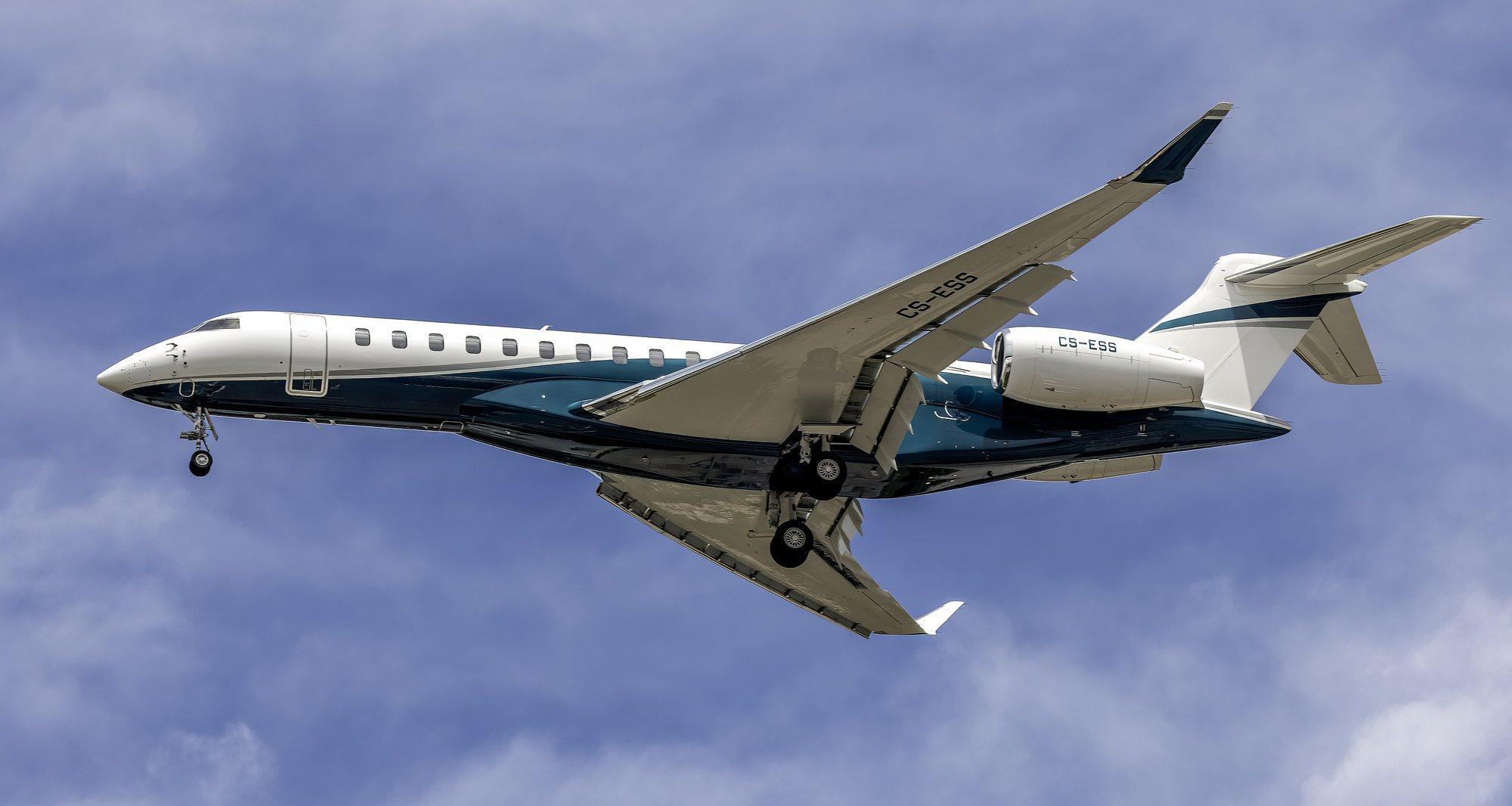
Photo: Acroterion · CC BY-SA 4.0
On this page
A private jet looks like the simplest luxury there is: you arrive, the door closes, you leave. Behind that convenience sits a surprisingly intricate business of shared-ownership schemes, prepaid flight cards, charter operators, planemakers with multi-year order books, and a rulebook that treats a corporate jet very differently from an airliner. In 2025 business jets flew more departures than in any year on record and manufacturers delivered more of them than the year before, even as scientists and governments sharpened their focus on the sector's carbon footprint. Here is how the industry works, what it costs, and why India still has a remarkably small private fleet.
Five Ways to Fly Without an Airline#
There is no single way to "fly private"; the options range from owning a jet outright to renting one for a single trip.
- Whole ownership. You buy the jet, carry every cost (crew, hangar, insurance, maintenance, fuel) and control the schedule. Many owners hand day-to-day running to a management company; managed aircraft flew about 21.7% of business jet departures in the first half of 2026, according to WINGX data reported by SherpaReport.
- Fractional ownership. You buy a share of an aircraft in a fleet run by a program manager such as NetJets or Flexjet, then pay a monthly management fee plus an hourly rate. In the United States these programs have their own chapter of federal aviation rules, Part 91 Subpart K.
- Jet cards. You prepay, or commit to, a block of flight hours at fixed hourly rates with guaranteed availability. You own nothing.
- On-demand charter. You rent a whole aircraft, with crew, for a specific trip from a certificated operator, priced per journey.
- Empty legs. When a charter jet has to reposition without passengers, operators sometimes sell that one-way leg cheaply. The catch: it flies when and where the aircraft needs to go, and can vanish if the original booking changes.
How much you fly decides which model makes sense. A long-standing rule of thumb from the National Business Aviation Association (NBAA) suggested charter for people flying fewer than 50 hours a year and whole ownership above roughly 175 hours. Utilisation also explains why fractional fleets work: Honeywell's 2026 outlook estimates that fractional aircraft fly about 850 hours a year, charter aircraft about 400 and privately flown aircraft about 200, as reported by AeroTime.
| Model | What you pay for | Who it tends to suit | Main trade-off |
|---|---|---|---|
| Whole ownership | The aircraft plus all fixed and variable costs | Very frequent flyers, corporations | Highest capital outlay and fixed costs |
| Fractional share | A share, monthly fee and hourly rate | Regular flyers who want ownership-style access | Multi-year commitment; fees whether you fly or not |
| Jet card | Prepaid or committed hours at fixed rates | Occasional to moderate flyers | Daily minimums and surcharges add up |
| On-demand charter | A whole aircraft per trip | Infrequent flyers, one-off trips | Prices and availability swing with demand |
| Empty leg | A one-way repositioning flight | Flexible travellers | Fixed route and time; can be cancelled |
What an Hour in a Private Jet Really Costs#
Private flying prices are hard to compare because some quotes include fuel and taxes and others do not. One consistent public dataset is the quarterly survey of North American jet card programs by Private Jet Card Comparisons, whose averages include the base rate, fuel surcharges and the 7.5% US federal excise tax.
| Category (Q1 2026) | Average jet card rate per hour |
|---|---|
| Turboprop | $6,729 |
| Very light jet | $7,852 |
| Light jet | $8,563 |
| Midsize jet | $9,639 |
| Super-midsize jet | $12,444 |
| Large-cabin jet | $15,612 |
| Ultra-long-range jet | $19,301 |
The headline hourly rate is not the whole bill. The same survey found the average daily minimum, the least flight time a customer is charged for on a flying day, rose to 96 minutes in the first quarter of 2026, from 81 minutes a year earlier. For a light jet it averaged 80 minutes; for a large-cabin jet, 117. A 40-minute hop can therefore be billed as well over an hour.
Ownership costs are harder to pin down. The purchase price is only the start: Bombardier's flagship Global 8000 was launched in 2022 with a list price of about $78 million. On top come fixed costs that accrue whether the jet flies or not (crew, hangarage, insurance, scheduled maintenance) and the variable costs of each flight (fuel, fees, maintenance reserves). Published annual estimates vary widely and mostly come from brokers with something to sell, so we have not quoted one.
Who Builds the Jets, and Who Is Flying Them#
Manufacturers had a strong 2025. The General Aviation Manufacturers Association reported 854 business jet deliveries in 2025, up 11.8% from 764 in 2024. The table below covers four of the best-known makers; GAMA's total also includes others, such as Textron Aviation (the Cessna Citation family), Pilatus and Honda Aircraft.
| Manufacturer | Main families and segments | 2025 business jet deliveries |
|---|---|---|
| Gulfstream (US) | G280 super-midsize up to G700/G800 ultra-long-range | 158 (136 large-cabin, 22 G280), per AeroTime |
| Bombardier (Canada) | Challenger (super-midsize, large), Global (large, ultra-long-range) | 157 (71 Challenger, 86 Global), per AIN |
| Embraer (Brazil) | Phenom (light), Praetor (midsize, super-midsize) | 155 (86 Phenom, 69 Praetor), per AIN |
| Dassault (France) | Falcon (large-cabin, long-range) | 37, short of a 40-jet target, per AIN |
The top of the market keeps stretching. Bombardier says its Global 8000, with a quoted range of 8,000 nautical miles and top speed of Mach 0.95, entered service on 8 December 2025. Dassault's all-new Falcon 10X first flew in June 2026, but its service entry has slipped to 2029, with the company's chief executive citing tougher certification rules for new designs.
Demand for flying has also climbed. Data firm WINGX counted 3.9 million business jet departures worldwide in 2025, the highest on record and 5% more than in 2024, with North America accounting for 72% of global traffic.
Private Flying Plays by Different Rules#
Safety oversight depends on who is paying and how. In the US, scheduled airlines fly under Part 121 of the federal aviation regulations, the most demanding set of rules. Charter operators carrying passengers for hire need FAA certification under Part 135. Private owners flying themselves or their guests operate under the general rules of Part 91, and fractional programs sit under Part 91 Subpart K.
The gap matters. In 2024 the National Transportation Safety Board analysed more than 500 fatal and non-fatal Part 135 accidents from 2010 to 2022. Among its findings: in 12 accidents, flight dispatch and operational control were deficient, partly because FAA rules did not require certificated dispatchers; four single-engine accidents involved unsafe loading. The board urged mandatory flight manifests and weight-and-balance records for Part 135 flights, and noted that major airlines, which were excluded from the study, operate under different and more stringent rules.
A separate risk is the illegal charter: an aircraft flown for hire by someone without the certificate to do so. The NBAA warns that passengers may find insurance claims denied, and advises asking for the operator's air carrier certificate and treating prices far below other quotes with suspicion.
India uses a similar split: commercial charter flying requires a Non-Scheduled Operator Permit (NSOP) from the Directorate General of Civil Aviation (DGCA), and passengers can ask an operator to show it before booking.
The Carbon Question Hanging Over the Cabin#
Private jets burn far more fuel per passenger than airliners, and their emissions are growing. A study by Stefan Gössling and colleagues, published in Communications Earth & Environment in November 2024, used flight-tracking data to estimate that private aviation's CO2 emissions rose 46% between 2019 and 2023, reaching about 15.6 million tonnes in 2023. Roughly half of the flights analysed were shorter than 500 km, and around two-thirds of the world's private jets were based in the US.
Our reading: the short-trip finding is what makes the sector politically exposed. A sub-500 km flight is the kind of journey where alternatives such as scheduled flights, rail or road often exist, so its emissions are harder to defend as unavoidable than those of a long intercontinental business trip.
Governments have begun to act through taxes. France sharply raised its air ticket solidarity tax from 1 March 2025, and for long-haul trips the levy on private jet passengers could amount to between €1,000 and €2,000. Cleaner fuels and more efficient engines may trim emissions per flight, but they do not change the basic arithmetic of a large aircraft carrying a handful of people.
India's Small Fleet in a Big Market#
India is, by its regulators' own account, the world's third-largest domestic aviation market, and it has a deep pool of wealth, yet a small private fleet. Aircraft sales firm JetHQ put India's fixed-wing business fleet at roughly 315 jets and turboprops as of April 2026, with fewer than 200 business jets registered. The same analysis says the number of NSOP holders hovered around 100 to 120 between 2009 and 2024, and that more than 80% of fixed-wing imports are pre-owned.
Tax is the main culprit, according to that analysis. An aircraft imported by an NSOP holder pays a 2.5% basic customs duty and 5% GST, while aircraft imported for personal use face a far heavier tax bill. The analysis blames that gap for holding back private ownership. The Union Budget for 2026–27 exempted certain aircraft components and parts from customs duty but did not cut duties on whole aircraft. Infrastructure is another constraint: fixed-base operators, the private terminals that serve business aircraft, are concentrated in a handful of cities including Delhi, Mumbai, Nagpur and Kochi.
Conclusion: A Boom With Strings Attached#
Private aviation is enjoying a genuine upswing: deliveries rose in 2025, flying hit a record, and forecasters expect the fleet to keep growing for a decade. Within that growth, flying is shifting toward fractional programs and away from corporate flight departments and traditional charter, a sign that customers want guaranteed access without owning a whole aircraft. But the boom comes with strings. Costs creep up once minimums and surcharges are counted, safety investigators keep pushing for tighter charter rules, and the sector's emissions make it an easy target for taxes. India shows the other side: demand can exist, but tax policy and infrastructure decide whether it becomes a fleet.