The Economics of Running an Airline
Fuel, leases, crews, fees and razor-thin margins: a plain-English guide to airline costs, CASK and RASK, and why full planes can still lose money.

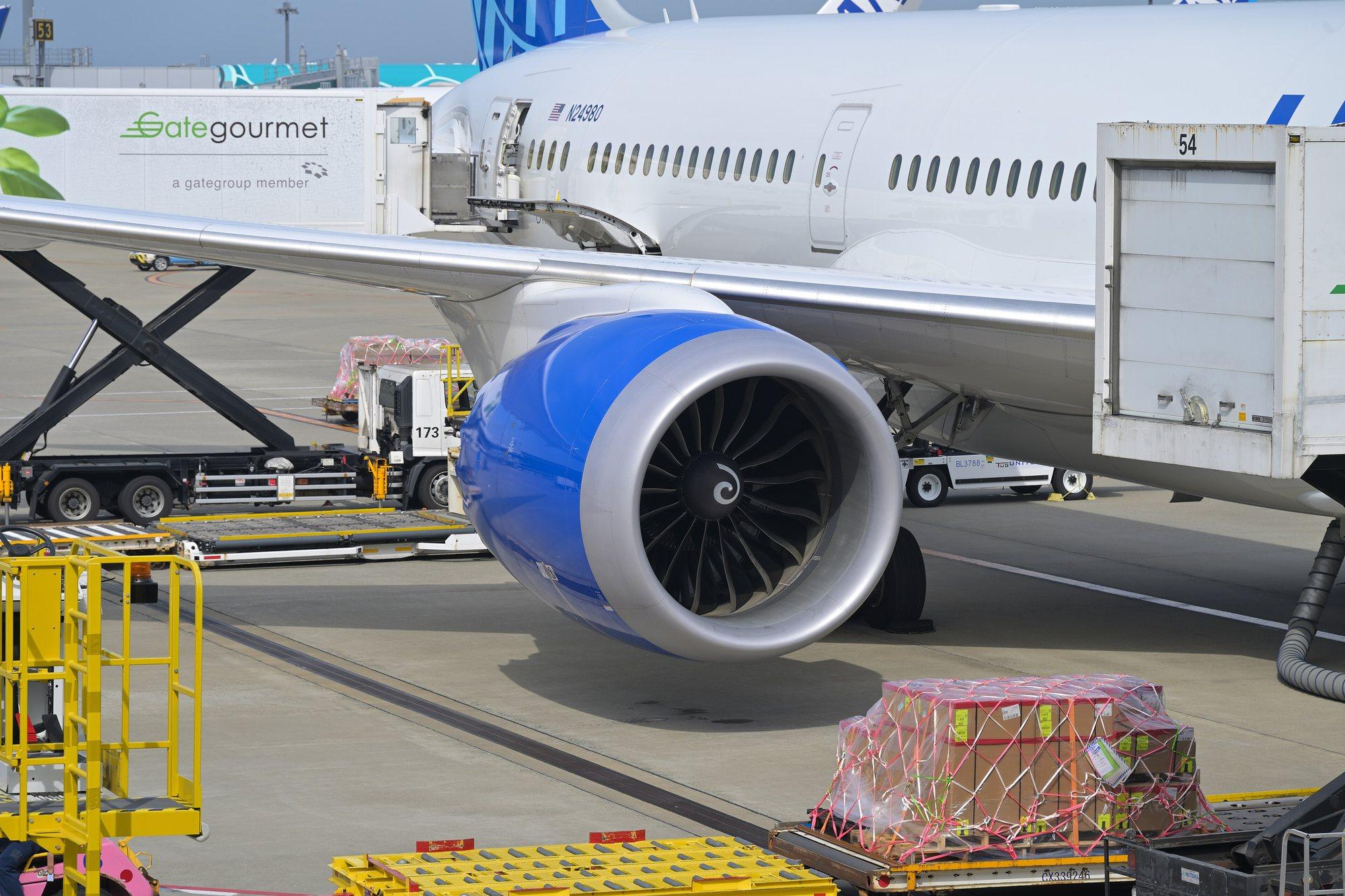
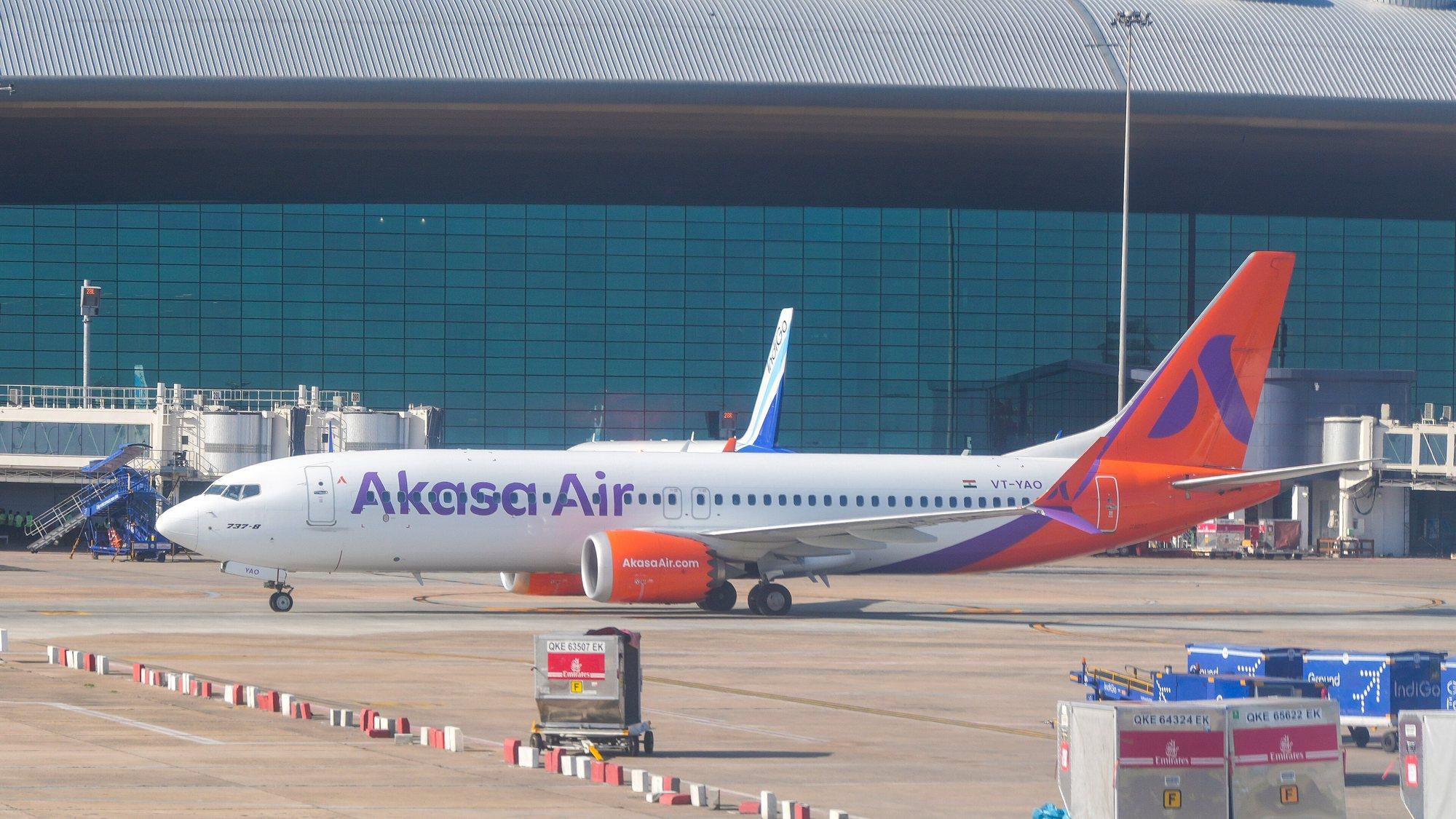
Photo: 4300streetcar · CC BY 4.0
On this page
Running an airline means selling a product that expires the moment the aircraft door closes. An empty seat on a departed flight can never be sold again, yet almost every cost of that flight, from fuel and crew to the aircraft lease and the landing fee, has already been paid. That tension sits at the heart of airline economics, and it explains why an industry expected to carry about 5.1 billion passengers this year keeps only a sliver of what it earns. In its June 2026 outlook, the International Air Transport Association (IATA) forecast that the world's airlines will make $23 billion of net profit in 2026 on $1.165 trillion of revenue: a 2.0% margin, or about $4.50 per passenger. Here is where the rest of the money goes, how analysts judge an airline's health, and why full planes can still lose money.
Where an airline's money goes#
At industry level, IATA expects operating costs of $1.117 trillion in 2026. Fuel accounts for $350 billion of that and labour for $271 billion. The remainder covers everything else it takes to fly: owning or leasing aircraft, maintenance, airport and air navigation charges, ground handling, selling tickets, insurance and overheads.
For finer detail, airline filings help. IndiGo, India's largest airline, breaks its costs down in its results presentation for the year to March 2026. The table puts the two side by side.
| Cost line | Global airlines, 2026 forecast (IATA) | IndiGo, FY2025–26 (our calculation, excluding currency losses) |
|---|---|---|
| Fuel | 31.4% | 31.5% |
| Labour and employee costs | 24.2% | 10.3% |
| Aircraft ownership (depreciation, finance costs, aircraft and engine rentals) | Included in the 44.4% below | 23.3% |
| Repair, maintenance and supplementary rentals | Included in the 44.4% below | 16.0% |
| Airport fees and charges | Included in the 44.4% below | 8.1% |
| Everything else | 44.4% (all non-fuel, non-labour costs) | 10.9% |
Two differences stand out. IndiGo's labour share is less than half the global average, a gap that most likely reflects lower Indian wage levels and a lean low-cost model. And its aircraft ownership costs show up largely as depreciation and finance costs because, under Indian accounting rules, leased aircraft sit on the balance sheet as assets with matching lease liabilities.
Fuel: the biggest cost, and the least controllable#
Airlines cannot negotiate with the oil market. According to IATA's outlook, the effective closure of the Strait of Hormuz on 28 February 2026 set off an oil and refinery shock. IATA assumes jet fuel will average $152 a barrel this year, against $90 in 2025, even though airlines will burn the same 104 billion gallons. Hedging cushions the blow for some: IATA estimates that unit fuel costs will rise 39% rather than the 69% jump in market prices, but warns the impact grows as old hedges expire.
Fuel efficiency is an airline's main defence, and it has stalled. IATA says efficiency gains stalled in 2024 and 2025, a first in aviation history, because delivery delays are keeping older, thirstier jets in service.
IndiGo's latest quarter shows what this does to a real airline. In April to June 2026, its fuel bill rose 85.7% to ₹10,833 crore, and fuel cost per available seat-kilometre climbed from ₹1.38 to ₹2.49, according to its Q1 FY27 presentation. Fuel went from about 30% of total costs a year earlier to about 42%.
Planes: buying, leasing and keeping them flying#
Few airlines own most of their aircraft. At the end of June 2026, IndiGo flew 432 aircraft: 36 owned, 60 on finance leases, 329 on operating leases and 7 damp-leased (rented with some crew), including six Boeing 787s. Leasing frees cash for growth, but rents are usually priced in US dollars. IATA estimates that roughly 60% of industry costs are dollar-denominated, so a weak local currency raises costs even when nothing else changes. IndiGo booked foreign-exchange losses of ₹8,976 crore in the year to March 2026, as the rupee's closing rate weakened from 85.50 to 94.56 to the dollar.
A global aircraft shortage is making ownership dearer. IATA counts an order backlog of 18,100 aircraft as of May 2026, equal to almost 60% of the active fleet, and estimates deliveries are about 5,600 aircraft short of the pre-pandemic trend. Lease rates are at record highs, mid-life aircraft values have risen sharply, and the average aircraft is now more than 15 years old.
Older aircraft also need more maintenance. IATA says maintenance costs are rising as fleets age and work harder, while supply-chain problems limit spare parts. At IndiGo, the line that bundles repair and maintenance with what it calls supplementary rentals rose 15.1% to ₹12,912 crore in FY2025–26.
People, airports, insurance and selling the seat#
Labour is the second big block. IATA expects airline labour costs of $271 billion in 2026, up 4%, for a workforce of 3.33 million, with persistent shortages of pilots, engineers and technicians and productivity still below pre-pandemic levels. Staffing mistakes are expensive: IndiGo's December 2025 schedule collapse, which the regulator's inquiry blamed on over-optimised crew rosters under new duty-time rules, led to a ₹22.2 crore penalty, according to the government's summary of the findings. IndiGo booked ₹577 crore of exceptional costs for compensation, vouchers, the penalty and related items, plus a ₹1,219 crore provision for higher social-security costs under India's new labour codes.
Airport and air navigation charges pay for runways, terminals, parking stands and air traffic control. IATA says they are "up sharply". IndiGo's airport fees and charges rose 13.8% to ₹6,548 crore last financial year.
Insurance is normally a small line, but war changes that. A May 2026 Morgan Lewis analysis found insurers raising war-risk premiums and tightening exclusions, raising the possibility that some airspace could become effectively uninsurable.
Ground handling and distribution complete the picture. Check-in, baggage and ramp work are done in-house or by contractors at every station. Selling tickets costs money too, through travel-agent and booking-system fees and payment charges, which is one reason airlines push customers to their own websites and apps. On the revenue side, airlines increasingly lean on extras: IATA expects ancillary and other revenue to grow 12.6% in 2026 to $165 billion.
The numbers analysts actually watch#
Airlines compare themselves using a handful of unit metrics. They sound technical, but each answers a simple question.
- ASK (available seat-kilometre): one seat flown one kilometre. It measures how much the airline produced.
- RPK (revenue passenger-kilometre): one paying passenger flown one kilometre. It measures how much it sold.
- Load factor: RPK divided by ASK, or how full the planes were.
- Yield: ticket revenue per RPK, or how much each passenger paid per kilometre.
- RASK and CASK: revenue and cost per ASK. If RASK is above CASK, each seat-kilometre makes money.
Here is how those measures looked at IndiGo, using its own definitions and figures.
| Metric | Apr–Jun 2025 | Apr–Jun 2026 | Full year to Mar 2026 |
|---|---|---|---|
| Capacity (billion ASK) | 42.3 | 43.5 | 172.4 |
| Load factor | 84.6% | 83.3% | 84.4% |
| Yield (₹ per RPK) | 4.98 | 6.04 | 5.06 |
| RASK (₹) | 4.86 | 5.66 | 4.99 |
| CASK (₹) | 4.31 | 5.71 | 5.00 |
| Net profit (₹ crore) | 2,311 | −238 | −2,394 |
The middle column tells the story of 2026. IndiGo raised its yield by 21% and its revenue per seat-kilometre by 16%, yet costs per seat-kilometre rose about 33%, mostly because of fuel. Revenue still fell just short of costs.
Why full planes can still lose money#
The short answer is thin margins and high fixed costs. Most of an airline's costs, including aircraft, crews, maintenance programmes and airport slots, are locked in months ahead, while revenue depends on fares set in a fiercely competitive market. IATA calls this high operating leverage: a small dip in revenue or rise in costs produces a much bigger swing in profit.
Regional swings can be brutal. IATA expects Middle Eastern carriers, normally among the most profitable, to post a combined $4.3 billion loss in 2026 as airspace closures cut their traffic.
Individual airlines show the same pattern. IndiGo grew capacity 9.5% and traffic 7.5% in the year to March 2026, filling 84.4% of its seats, yet reported a net loss of ₹2,394 crore. Currency losses and one-off charges did the damage; stripping out foreign-exchange effects alone, the company reported a profit of ₹5,706 crore. Weaker airlines have less room. US budget carrier Spirit Airlines, already restructuring, shut down on 2 May 2026 after a sustained rise in fuel prices left it without the funding to continue.
What it all adds up to#
An airline's economics come down to a race between two numbers: what it earns for every seat-kilometre it flies and what that seat-kilometre costs. Fuel, aircraft, people and airport charges make up most of the cost, and many of these costs are priced in dollars, set by others or locked in long before take-off. Load factor and yield determine revenue, and even record-full planes cannot rescue an airline when fuel or currency moves against it.
That is why the industry's margins are measured in single digits even in good years, and why a fuel shock like 2026's can halve global profits in a matter of months. For travellers, it is also the reason fares rise quickly when costs do: with so little cushion, airlines have nowhere else to put the bill.