How Aircraft Accidents Made Flying Safer
From the Comet to the 737 MAX: how official investigations into seven accidents reshaped aircraft design, pilot training and air safety rules.

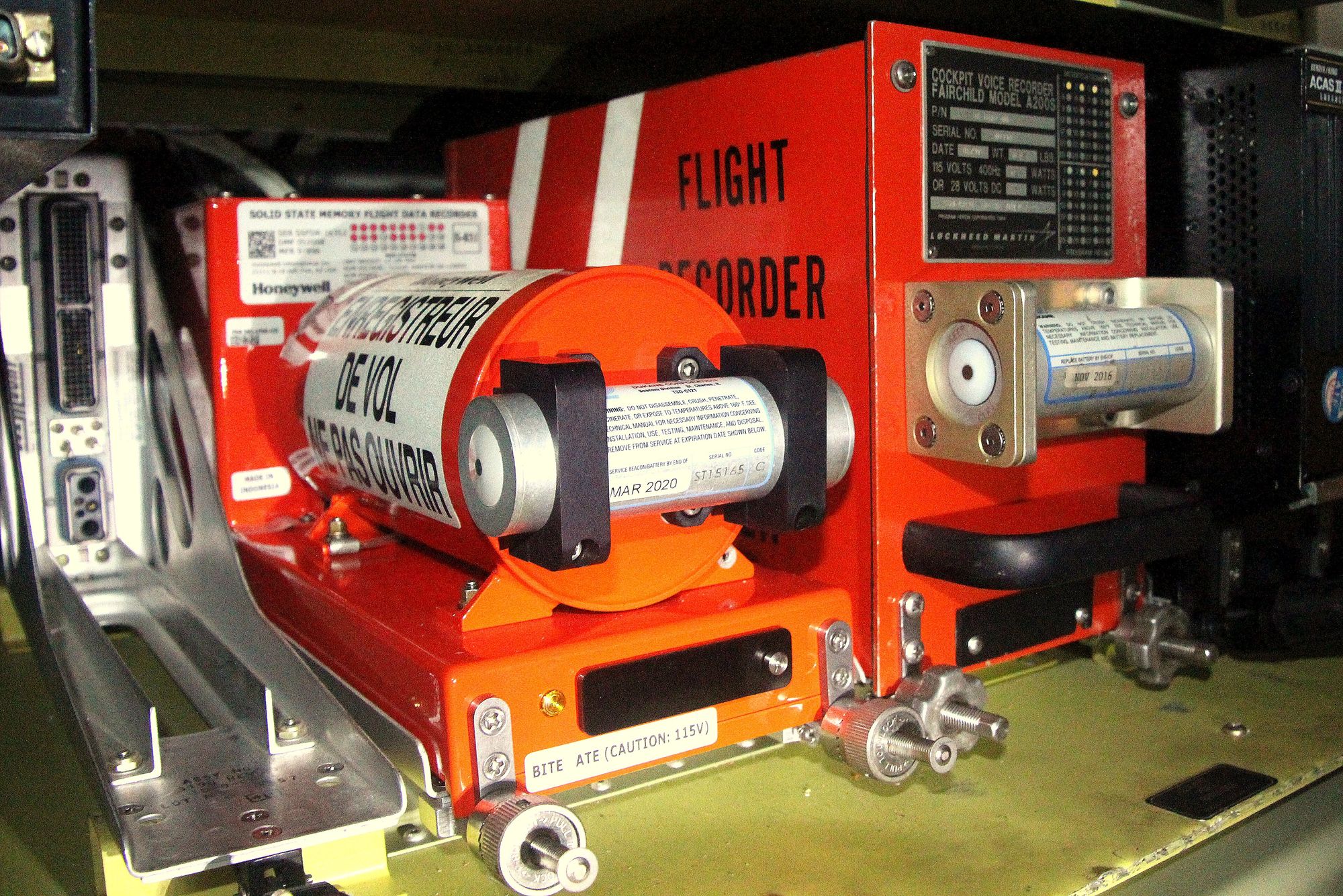
Photo: YSSYguy · CC BY-SA 3.0
On this page
Commercial aviation's safety record was not handed down; it was learned, often at a terrible price. Again and again, an accident has been followed by a painstaking investigation, a published report, and changes to how aircraft are designed, maintained and flown. This article revisits seven accidents between 1954 and 2019 that reshaped the system, relying on official investigators' findings. Behind every case are people who did not come home and families who still remember them. The purpose of revisiting these events is the purpose of the investigations themselves: to understand what happened so that it does not happen again.
Lessons in Metal: The Comet and Aloha 243#
The Comet, 1954#
The de Havilland Comet was a jet-age pioneer, operating the first pure-jet commercial flight in May 1952 (Aerossurance). On 10 January 1954, BOAC Flight 781, a Comet registered G-ALYP, broke up in flight near the Italian island of Elba, and all 35 people on board died. Services resumed in March after precautionary modifications, but on 8 April 1954 a second Comet, G-ALYY, operating as South African Airways Flight 201, was lost near Naples with 21 people on board, and Comet operations stopped again.
The breakthrough came from a full-scale experiment at the Royal Aircraft Establishment in Farnborough, where a Comet fuselage was submerged in a water tank and pressurised again and again to simulate flight after flight. Wreckage recovered off Elba carried the hallmarks of fatigue cracking, starting at a cut-out for a navigation antenna on top of the fuselage. The UK Court of Inquiry's report, published on 12 February 1955, linked the in-flight failure to the same kind of fatigue produced in the tank.
Popular accounts blame "square windows", but the Elba failure began at an antenna aperture, not a passenger window. The lasting changes went deeper: British requirements were revised so that fatigue tests had to use a complete pressure cabin not previously used for strength testing, and later designs adopted fail-safe features such as alternative load paths and crack stoppers. Those ideas evolved into today's damage-tolerance standards.
Aloha Flight 243, 1988#
Thirty-four years later, fatigue returned in a different form. On 28 April 1988, Aloha Airlines Flight 243, a Boeing 737-200, suffered an explosive decompression at 24,000 feet on a flight from Hilo to Honolulu when about 18 feet of cabin skin and structure separated from the upper fuselage. A flight attendant was lost from the aircraft and is presumed to have died, and eight other people were seriously injured. The crew made an emergency landing on Maui.
The NTSB report (AAR-89/03) highlighted multiple-site fatigue cracking in the fuselage lap joints, the airline's maintenance programme and the FAA's oversight of it. The Board found that maintenance had failed to detect significant disbonding and fatigue damage in a lap joint (FAA Lessons Learned).
The response became the FAA's Aging Aircraft Program, which a 2010 rule on widespread fatigue damage traces directly to Aloha 243. That rule requires manufacturers to set a "limit of validity" for each airframe's structural maintenance data; operators may not fly an aircraft beyond it without an approved extension.
Sharing the Sky: The Grand Canyon Collision (1956)#
On 30 June 1956, a Trans World Airlines Lockheed Super Constellation and a United Airlines DC-7 collided at about 21,000 feet over the Grand Canyon, killing all 128 people aboard the two aircraft, according to the US Department of the Interior. The Civil Aeronautics Board, which investigated, concluded that the probable cause was that the pilots did not see each other in time to avoid the collision (Aviation Safety Network record).
The accident gave momentum to reform. In May 1958 Senator Mike Monroney introduced a bill to create an independent Federal Aviation Agency; President Eisenhower signed the Federal Aviation Act that August, and the new agency, today's FAA, was operational within months (FAA Mike Monroney Aeronautical Center). The Interior Department credits the push that followed the collision with nationwide radar coverage, a shared military and civilian navigation system, collision-avoidance systems and flight data recorders.
Tenerife and the Human Factor (1977)#
On 27 March 1977, a bomb explosion at Las Palmas airport led to diversions that crowded the small Los Rodeos airport on Tenerife. In poor visibility, a KLM Boeing 747 began its take-off run without take-off clearance and struck a Pan Am 747 that was still on the same runway. In all, 583 people died, the highest toll of any accident in aviation history (SKYbrary; NTSB).
The investigation, carried out for the Spanish government, attributed the accident primarily to the KLM captain's decision to take off without clearance (FAA Lessons Learned). Its recommendations stressed standard radio phraseology, including avoiding the phrase "take-off" in departure clearances. Today the word is reserved for the clearance itself; otherwise crews and controllers say "departure" (SKYbrary).
The deeper legacy concerned teamwork. Tenerife was one of several 1970s accidents that pointed researchers towards failures of communication, decision-making and leadership on the flight deck. In June 1979 NASA hosted an industry workshop, Resource Management on the Flight Deck, that helped launch crew resource management (CRM). As PBS NOVA summarises, cockpit hierarchy gave way to decisions by mutual agreement, and CRM is now standard worldwide.
Air France 447: When the Automation Hands Back Control (2009)#
On 1 June 2009, Air France Flight 447, an Airbus A330-203 registered F-GZCP, disappeared over the Atlantic on its way from Rio de Janeiro to Paris with 228 people aboard. The wreckage was found in April 2011, about 3,900 metres down, and France's BEA published its final report on 5 July 2012.
The BEA's summary of findings describes a chain of events. Ice crystals obstructed the Pitot probes that measure airspeed, briefly producing inconsistent speed readings; the autopilot disconnected and the flight controls reverted to a less protected mode. Control inputs then destabilised the flight path, the approach to the stall was not identified, and the stall itself was never diagnosed. The BEA's associated factors included a lack of high-altitude training in manual handling or the unreliable-airspeed procedure, task-sharing weakened by startle, and the stall warning not being acted upon.
AF447 was among the loss-of-control accidents behind a worldwide push on upset prevention and recovery training (UPRT). In the United States, an FAA rule of November 2013, implementing a law Congress passed after the 2009 Colgan Air accident, added stall and upset recovery to airline training and emphasised manual flying skills, with carriers given five years to comply. In Europe, UPRT was written into pilot licensing rules that apply from 20 December 2019.
The 737 MAX Accidents and Certification Reform (2018–2019)#
On 29 October 2018, Lion Air Flight 610, a Boeing 737-8 MAX registered PK-LQP, crashed into the sea off West Java, and all 189 people on board died. On 10 March 2019, Ethiopian Airlines Flight 302, registered ET-AVJ, crashed near Bishoftu shortly after take-off from Addis Ababa. Together, the two accidents killed 346 people (EASA).
Indonesia's KNKT published its final report on 25 October 2019 (ATSB); as Business Jet Traveler reported, it found that design and certification assumptions about how pilots would respond to a malfunction proved incorrect, that the Maneuvering Characteristics Augmentation System (MCAS) relied on a single angle-of-attack sensor, that a mis-calibrated replacement sensor went undetected, and that the crew's management of multiple alerts was ineffective. Ethiopia's investigation bureau published its final report on 23 December 2022, identifying repeated nose-down commands from MCAS, triggered by erroneous angle-of-attack data, as central to the accident.
In September 2019 the NTSB warned the FAA that its assumptions about pilot response to flight-control failures did not account for multiple simultaneous alerts, and recommended fixing this for the MAX and other airliners.
Regulators around the world grounded the MAX in March 2019. The FAA lifted its order on 18 November 2020, subject to software changes, wiring modifications and new pilot training (AIN), while EASA ran its own independent assessment and set its own conditions for the aircraft's return in Europe. In December 2020 Congress passed the Aircraft Certification, Safety, and Accountability Act, requiring manufacturers to share safety-critical information about systems such as flight controls with the FAA, airlines and pilots.
How Today's Safety System Learns#
The common thread is a system built to learn rather than to punish. Under Annex 13 of the Chicago Convention, the sole objective of an accident investigation is prevention, not apportioning blame or liability, and judicial proceedings should be kept separate (ICAO). The state where an accident happens leads the investigation, while other states participate through accredited representatives and can ask for their comments to be appended to the final report, as the BEA explained in the ET302 case.
Equally important are the near-misses. NASA's Aviation Safety Reporting System, set up with the FAA in 1976, collects voluntary, confidential and non-punitive reports from pilots, controllers, mechanics and others: more than 2.3 million so far, including 121,128 in 2025.
| Accident | Key official finding | Lasting change |
|---|---|---|
| Comet, Elba (1954) | Fatigue failure of the pressure cabin | Full-scale fatigue testing; fail-safe and damage-tolerant structures |
| Grand Canyon (1956) | Pilots did not see each other in time | Federal Aviation Act; radar coverage and modern air traffic control |
| Tenerife (1977) | Take-off begun without clearance | Standard phraseology; crew resource management |
| Aloha 243 (1988) | Undetected disbonding and fatigue in lap joints | Aging Aircraft Program; structural "limit of validity" |
| Air France 447 (2009) | Airspeed loss, unrecognised stall | Upset prevention and recovery training |
| Lion Air 610 / ET302 (2018–19) | MCAS and flawed pilot-response assumptions | Grounding; MCAS software changes; certification reform |
What the long-term numbers show#
Over decades, the trend is clear. A 2024 MIT study found that the worldwide risk of death per passenger boarding fell from about 1 in 350,000 in 1968–1977 to 1 in 7.9 million in 2008–2017 and 1 in 13.7 million in 2018–2022, roughly halving every decade (MIT News). The same research found wide gaps between countries.
Individual years can still vary sharply. IATA's 2025 safety report recorded eight fatal accidents, 394 onboard fatalities and a fatality risk of 0.17 per million flights, up from 0.06 in 2024, even as the overall accident rate improved. Over a decade, IATA says, the fatal accident rate improved from one per 3.5 million flights (2012–2016) to one per 5.6 million (2021–2025).
Conclusion: Safer, but Never Finished#
These improvements came from investigators free to follow the evidence, regulators willing to act on it, and a professional culture that treats every failure as information. The Comet taught engineers to test whole structures; the Grand Canyon collision helped give the United States a modern aviation regulator; Tenerife changed how crews talk; Aloha 243 put a lifespan on airframes; AF447 renewed the focus on hand-flying; and the 737 MAX forced a rethink of certification. Today's flights rest on those lessons, paid for by the people these reports remember.