What India's Air Accidents Taught Its Aviation System
From Charkhi Dadri to Kozhikode, official inquiries reshaped Indian aviation. What they found, what changed, and where the AI171 investigation stands.

Photo: contri from Yonezawa-Shi, Yamagata, Japan · CC BY-SA 2.0
On this page
Every serious air accident leaves families grieving and questions unanswered. It also leaves an official record: an inquiry that tries to establish what happened so that it does not happen again. India's aviation system has been shaped by several of these inquiries, some quickly and some only partly. This article looks at three accidents with completed official findings, then sets out, separately and carefully, what is and is not yet known about the loss of Air India Flight 171 in June 2025. Our purpose is to explain the lessons, not to assign blame. That is also the stated purpose of the investigations themselves.
How Accident Investigations Work#
Under Annex 13 of the Chicago Convention, the international rulebook overseen by the International Civil Aviation Organization (ICAO), the sole objective of an accident investigation is prevention, not blame or liability. Investigations usually produce two key documents. A preliminary report, issued early in the investigation, records factual information and is explicitly "subject to change". A final report sets out the analysis, the probable cause, contributing factors and safety recommendations.
In earlier decades, India often investigated major accidents through a Court of Inquiry appointed by the government. Since 2012, investigations have been led by a dedicated body, the Aircraft Accident Investigation Bureau (AAIB). As described below, that change was itself a lesson learned.
1996: The Collision Over Charkhi Dadri#
On the evening of 12 November 1996, two aircraft collided in mid-air near Charkhi Dadri in Haryana, about 90 km from Delhi. Saudi Arabian Airlines Flight 763, a Boeing 747 that had just left Delhi for Dhahran with 312 people on board, was climbing. Kazakhstan Airlines Flight 1907, an Ilyushin Il-76 arriving from Shymkent with 37 people on board, was descending towards Delhi. All 349 people on the two aircraft died.
The Saudi aircraft had been cleared to hold at flight level 140, about 14,000 feet. The Kazakh aircraft had been cleared down only to 15,000 feet, leaving about 1,000 feet of separation between them.
The changes that followed were substantial. According to The Week, within weeks India notified ICAO that no commercial aircraft carrying 30 or more passengers could land in India without an airborne collision avoidance system (ACAS), which warns pilots of conflicting traffic. Secondary surveillance radars, which let controllers see each aircraft's altitude directly, were installed. Delhi's shared arrival and departure path was split into separate inbound and outbound routes. India also pressed ICAO for minimum English standards. After nearly a decade of negotiation, aviation personnel involved in international operations, including pilots and controllers, now have to be assessed at ICAO's Level 4 English proficiency.
2010: Mangalore and the Unstabilised Approach#
On 22 May 2010, Air India Express Flight 812, a Boeing 737-800 arriving from Dubai, overran the runway while landing at Mangalore. The airport is a "tabletop" airport, with steep drops beyond the runway ends. 158 people died and eight survived.
A Court of Inquiry, headed by retired Air Marshal Bhushan Nilkanth Gokhale, placed the primary responsibility on the flight's handling. As reported by the Associated Press, the court found that the captain had been asleep for much of the flight and showed signs of "sleep inertia" on descent. It also found that he continued the landing despite the co-pilot urging a go-around. The aircraft touched down after about 1,500 metres of the 2,400-metre runway had already passed. The full report was submitted to the Ministry of Civil Aviation. A later AAIB report summarised it as an unstabilised approach followed by a long landing past the middle of the runway.
Its recommendations included clearer rules on monitoring flight-data "exceedances", larger runway end safety areas (RESA) at tabletop airports, and an investigating body independent of the regulator.
2020: Kozhikode, a Decade Later#
On 7 August 2020, Air India Express Flight 1344, a Boeing 737-800, was carrying 184 passengers and six crew from Dubai to Kozhikode. It was a Vande Bharat Mission flight, bringing home Indians stranded abroad by the pandemic. On its second approach, in light rain with a tailwind, it touched down about 4,438 feet along the 8,858-foot runway. It could not stop, overran the runway end and went down the slope beyond the tabletop. There was no fire. Twenty-one people died, 19 passengers and both pilots.
The report went beyond the cockpit. It said the role of "systemic failures" could not be overlooked. Its contributory factors included poor crew resource management and a "steep authority gradient" that discouraged the first officer from intervening. It also cited weaknesses in the airline's training and supervision, a staffing policy that left Kozhikode with one captain for 26 first officers, and gaps in regulatory follow-through.
The investigators also noted "glaring similarities" with Mangalore: the same airline, the same aircraft type, the same kind of tabletop airport and the same sequence of events.
| Mangalore 2010 | Kozhikode 2020 | |
|---|---|---|
| Aircraft | Boeing 737-800, Air India Express | Boeing 737-800, Air India Express |
| Airport type | Tabletop | Tabletop |
| Key finding | Unstabilised approach, long landing, overrun | Unstabilised approach, long landing, overrun |
| Go-around call | Co-pilot urged a go-around | Go-around called by pilot monitoring |
| Investigating body | Court of Inquiry | AAIB |
According to the AAIB, the DGCA reported that all actionable Mangalore recommendations had been implemented. The investigators disagreed in part. The regulator's rule on flight-data monitoring had been revised only once, in 2017, without removing the ambiguity Mangalore's inquiry had flagged, and long landings were still not a monitored parameter. Kozhikode's runway safety areas had been enlarged to 240 by 90 metres after the 2010 recommendation, but by reducing the runway's declared usable length. The soft ground at the ends was unchanged.
Air India 171: What Is Known So Far#
This section reports only official, verified information. The investigation is ongoing, and nothing here is a conclusion about its cause.
What the preliminary report stated#
On 12 June 2025, Air India Flight AI171, a Boeing 787-8 registered VT-ANB, crashed shortly after take-off from Ahmedabad on a flight to London Gatwick. According to the AAIB's preliminary report, published on 12 July 2025, 241 of the 242 people on board died: all 12 crew and 229 passengers. One passenger survived with serious injuries, and 19 people on the ground were killed.
The preliminary report recorded the following factual sequence:
- The aircraft lifted off normally and reached a maximum recorded airspeed of 180 knots. Immediately afterwards, the fuel control switches for both engines moved from RUN to CUTOFF, one second apart, and both engines began to lose thrust.
- On the cockpit voice recording, one pilot is heard asking the other why he cut off the fuel; the other replies that he did not. The report does not identify which pilot said which words.
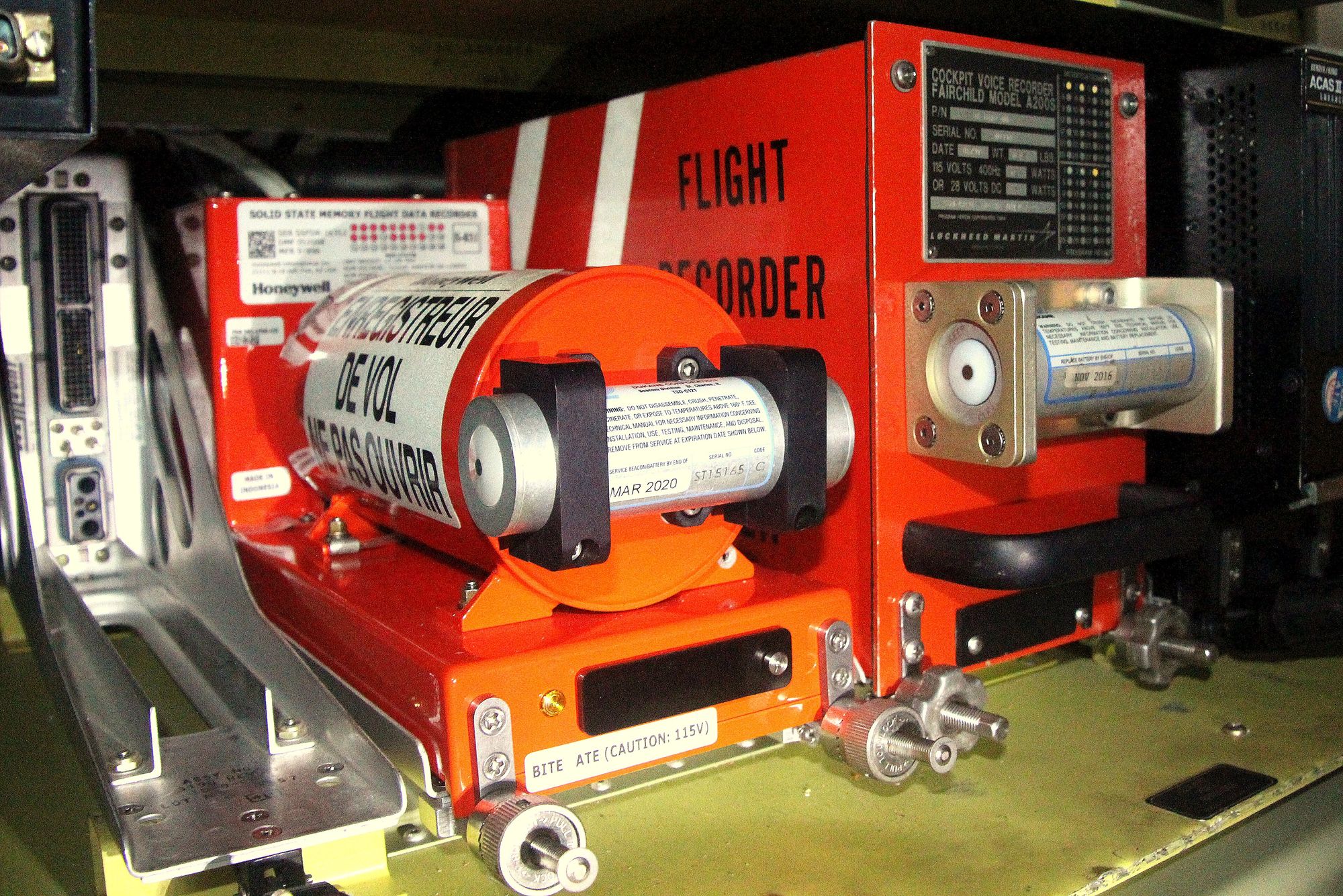
- The ram air turbine, an emergency power source, deployed. About 10 seconds after the first switch moved, it returned to RUN, followed by the second about four seconds later. The engine control systems attempted to relight both engines. The report records that engine 1 began to recover, while engine 2 relit but could not stop its loss of speed. A "MAYDAY" call was made shortly before the recording ended.
- Fuel samples from the refuelling bowsers and tanks tested satisfactory, and no significant bird activity was seen near the flight path.
- A 2018 US Federal Aviation Administration bulletin had advised, but not required, inspections of the fuel switch locking feature. Air India said it had not carried them out because they were advisory. No defect related to the switches had been reported on VT-ANB since 2023.
- At that stage, the AAIB issued no recommended actions to operators or manufacturers of the Boeing 787-8 or its GE engines.
The report states that its information is "preliminary and subject to change".
Where the investigation stands#
On the first anniversary, 12 June 2026, the AAIB issued an interim statement. It reported "significant progress" in analysing aircraft systems, flight recorder data, engine components and maintenance records. It said the final report would follow completion of all investigative activities and the international review required under Annex 13, and it urged the public to avoid speculation.
The case has also been before India's Supreme Court, on petitions seeking a court-monitored inquiry. In November 2025, hearing a plea from the captain's father, Justice Surya Kant remarked of the captain that "nobody can blame him for anything". In July 2026, the AAIB told the court that a draft final report was likely to be ready by October. Its affidavit said it had completed 49 of 66 procedural steps. On 28 July 2026, the government told the court that the draft would be filed in a sealed cover in the first week of October. It attributed the delay to aircraft components that had to be sent abroad for specialist examination.
The Lessons and the Reforms#
Taken together, these inquiries changed Indian aviation in visible ways:
- Seeing and avoiding other aircraft. Charkhi Dadri led to the collision-avoidance mandate, radar that shows controllers each aircraft's altitude, separated air routes and a global push for English proficiency.
- Independent investigation. The AAIB was formed on 30 July 2012. According to its own account in the Kozhikode report, it was set up to separate investigation from regulation, in line with the Mangalore inquiry's recommendation.
- Runway safety. Tabletop runways were required to have larger runway end safety areas, and arresting systems, which use crushable material to stop overrunning aircraft, were studied. After Kozhikode, the AAIB recommended mandatory onboard performance tools for calculating landing distances, full flight-data monitoring and training that encourages first officers to call for, and if necessary take over, a go-around.
- Fatigue. In January 2024 the DGCA tightened pilot duty rules. It raised weekly rest to 48 hours and cut permitted night landings from six to two.
Conclusion: Learning Is a Process, Not an Event#
Each of these accidents involved people who boarded expecting an ordinary journey, and families still living with the loss. The inquiries that followed made Indian skies safer: collision-avoidance systems are now standard, investigators are independent of the regulator, and runway and fatigue rules are stricter than before. They also show that a recommendation is only useful once it has been fully implemented. For Air India 171, the most important document has not yet been published. Until the AAIB releases its final report, the responsible course for everyone, including the media, is the one the investigators themselves have asked for: patience, and no premature conclusions.