The State of World Aviation: Full Planes, Thin Margins, Too Few Jets
Flat demand, record-full cabins, a fuel shock and a shortage of new aircraft: where global aviation stands in late October 2026, region by region.

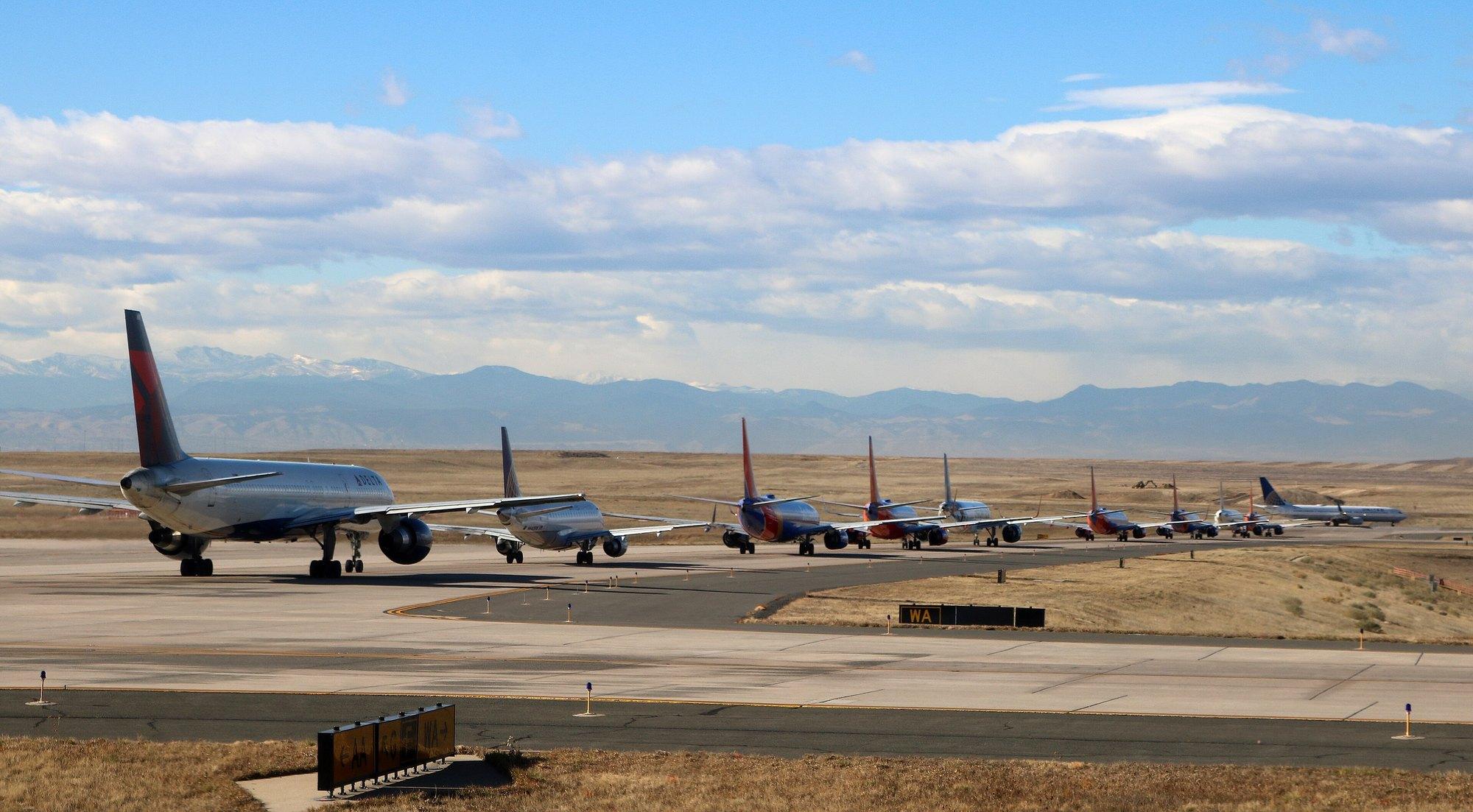
Photo: Jeffrey Beall · CC BY 4.0
On this page
For several years after the pandemic, the story of world aviation was recovery. In late 2026 it is something more awkward: an industry whose aircraft are almost as full as they have ever been, yet whose traffic has stopped growing and whose profits have halved. War in the Gulf has driven fuel prices up and cut off some of the world's biggest transfer hubs. Manufacturers still cannot build aircraft fast enough, engines are spending months in workshops, and the busiest airports and airspace are close to their limits. This is where things stand as of late October 2026, according to the latest industry data.
Demand Has Stalled, but the Seats Are Full#
In August 2026, passenger traffic was 0.8% lower than a year earlier, according to the latest monthly figures from the International Air Transport Association (IATA), which measures traffic in revenue passenger-kilometres (one paying passenger flown one kilometre). Capacity rose 0.3%, and the average load factor, the share of seats filled, was 85.1%, down 0.9 points. Strip out Middle Eastern airlines and demand grew 0.6%. International traffic fell 0.9%, but rose 1.3% outside the Middle East, while domestic markets fell 0.5%.
That is a sharp slowdown, not a collapse. In June, IATA forecast that airlines would carry 5.1 billion passengers in 2026, 2.4% more than in 2025, with a record average load factor of 84.0%. Airlines are also planning cautiously for more: IATA's chief economist, Marie Owens Thomsen, pointed to October schedules with 2.0% more seats than a year earlier.
A Region-by-Region Picture#
The global average hides very different stories.
| Region | International demand, Aug 2026 vs Aug 2025 | International load factor, Aug 2026 | Forecast 2026 net profit |
|---|---|---|---|
| Asia-Pacific | −0.1% | 85.6% | $6.6bn |
| Europe | +2.1% | 86.8% | $9.6bn |
| North America | −1.7% | 86.8% | $9.4bn |
| Middle East | −14.2% | 79.1% | −$4.3bn |
| Latin America and Caribbean | +6.7% | 84.8% | $1.2bn |
| Africa | +6.7% | 78.4% | $0.1bn |
Source: IATA (August traffic data and June 2026 outlook).
North America. US domestic traffic fell 2.9% in August. IATA's June outlook report notes that North American airlines have largely stopped hedging fuel, so price rises hit costs quickly, and that weak low-fare leisure demand is hurting budget carriers more than network airlines, which can sell premium seats.
Europe. European airlines grew international traffic by 2.1%. According to IATA, they have gained some passengers diverted from Gulf hubs and hedged more of their fuel than any other region, some locking in up to 70% of their needs at pre-crisis prices. But hedges only delay the hit, and Europe carries structurally higher costs: fuel-blending mandates, high airport and air navigation charges, and the closure of Russian airspace to its airlines.
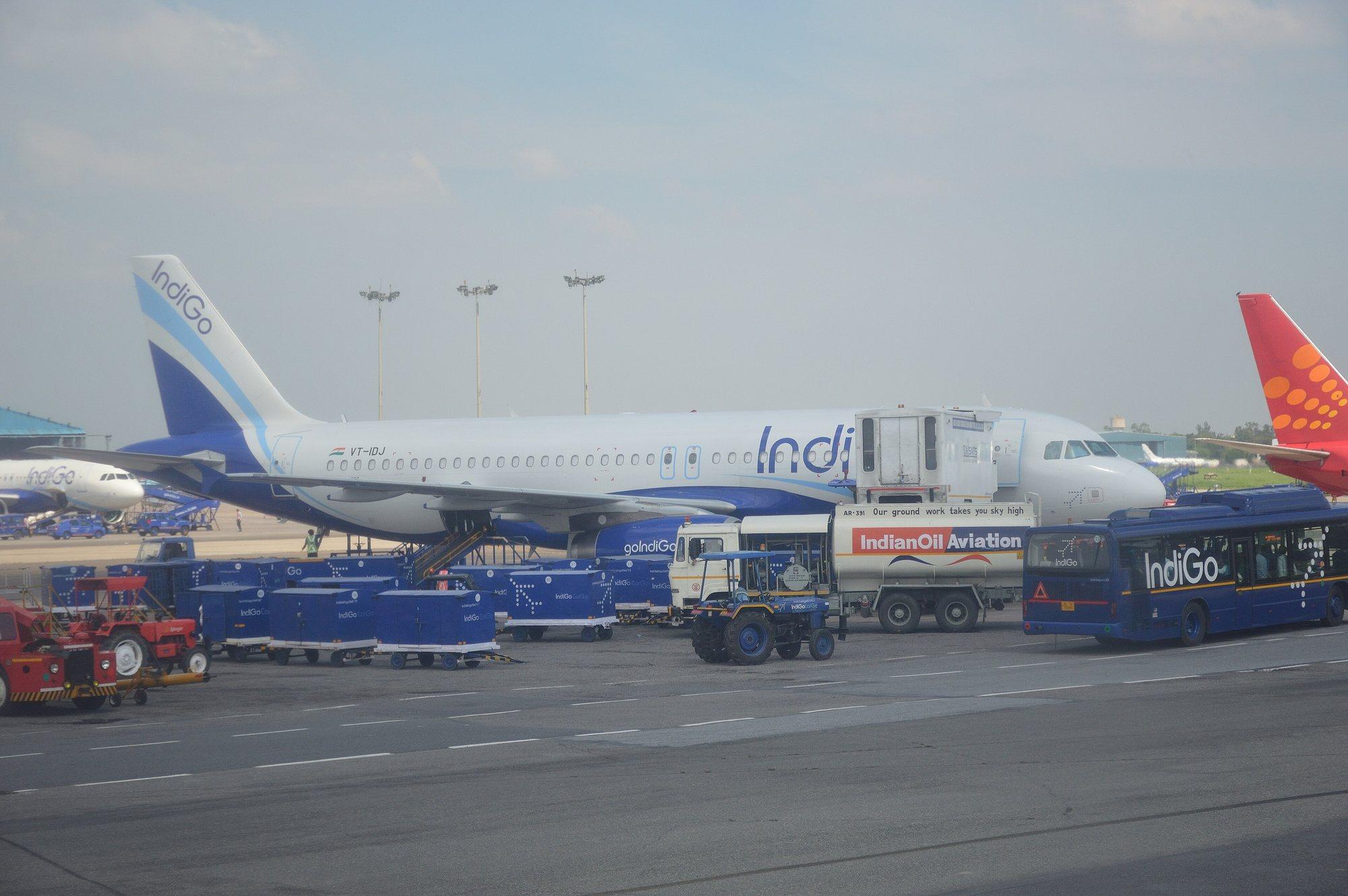
Asia-Pacific. China's domestic market grew 5.8% in August, while India's fell 7.5%, with only 78.7% of seats filled; our report on Indian aviation explains why. IATA warns that the region depends heavily on Gulf crude, which exposes it to fuel shortages as well as high prices. Hubs such as Singapore and Hong Kong have won Europe–Asia travellers who used to connect in the Gulf, though IATA cautions that those gains may not last.
Middle East. The region's airlines flew 14.2% less international traffic in August than a year earlier, and IATA expects them to swing from a $7.2 billion profit in 2025 to a $4.3 billion loss. Dubai International handled 31.5 million passengers in the first half of 2026, down 31.3%, though monthly traffic has been climbing back, Khaleej Times reported. The airspace closures behind this are covered in How Global Conflicts Are Disrupting Air Travel.
Latin America and Africa. Both regions grew international traffic by 6.7%, and Brazil's domestic market rose 4.3%. IATA says Latin American carriers are squeezed by currency swings and high financing costs. African airlines could pick up some traffic rerouted from the Gulf, IATA says, but they pay heavily for imported fuel and contend with weak infrastructure and fragmented airspace. Their forecast profit works out at about 40 cents per passenger.
Competition and Consolidation#
Thin margins tend to push airlines together, and 2026 has been a busy year for deals.
- United States: Spirit Airlines, the budget carrier that had been restructuring, stopped flying on 2 May 2026. It said a sharp rise in oil prices had left it unable to raise the extra funds it needed.
- South Korea: Korean Air and Asiana cleared their final corporate votes in August and plan to operate as one airline from 17 December 2026. Regulators made Korean Air give up overlapping routes and slots, including Heathrow slots that went to Virgin Atlantic.
- Europe: Portugal picked Lufthansa as its preferred buyer for a 44.9% stake in TAP Air Portugal, at €1.2 billion, blue News reported; with an EU competition review still to come, completion is expected in 2028. Lufthansa already owns 41% of Italy's ITA Airways and has exercised options to raise that to 90%. Air France-KLM, the losing TAP bidder, plans to lift its stake in SAS to 60.5% by the end of 2026, subject to regulatory approval.
The Cost Squeeze: Fuel, People and Parts#
Fuel is the biggest single problem. IATA expects the industry's fuel bill to reach about $350 billion in 2026, up from $252 billion, even though airlines will burn the same 104 billion gallons. It assumes jet fuel will average $152 a barrel, up almost 70%, with the gap between crude oil and jet fuel prices at a historic high of $57 a barrel. Fuel rises to 31.4% of operating costs, from 25.4%.
Labour comes next, at $271 billion for 3.33 million airline employees. IATA reports persistent shortages of pilots, engineers and technicians.
Other costs are climbing too. Older aircraft need more maintenance, spare parts are scarce, and IATA says airport and air navigation charges are "up sharply". In Europe, airlines lose their last free carbon allowances under the EU Emissions Trading System in 2026, and IATA estimates the annual bill could exceed €5.4 billion. For a line-by-line breakdown, see The Economics of Running an Airline.
Too Few New Aircraft, Too Many Idle Engines#
The industry's most stubborn constraint is hardware.
Lease rates are at record levels, and IATA says the shortage halted fuel-efficiency gains in 2024 and 2025 for the first time, because older, thirstier jets are staying in service.
Output is rising, slowly. Airbus delivered 547 aircraft in the first nine months of 2026, up 8% on a year earlier, against a full-year target of about 870, AviationNews.eu reported. Boeing delivered 475 commercial aircraft by the end of September, 367 of them from the 737 family.
Engines are a separate bottleneck. IATA says engine availability problems have already limited traffic growth, and inspections of Pratt & Whitney's geared turbofan engines continue to keep jets on the ground. Wizz Air, one of the most exposed airlines, still had 27 aircraft grounded at the end of June 2026, down from a peak of about 60, and its chief executive expects the issue to be resolved by the end of 2027.
Airports and Airspace Near Their Limits#
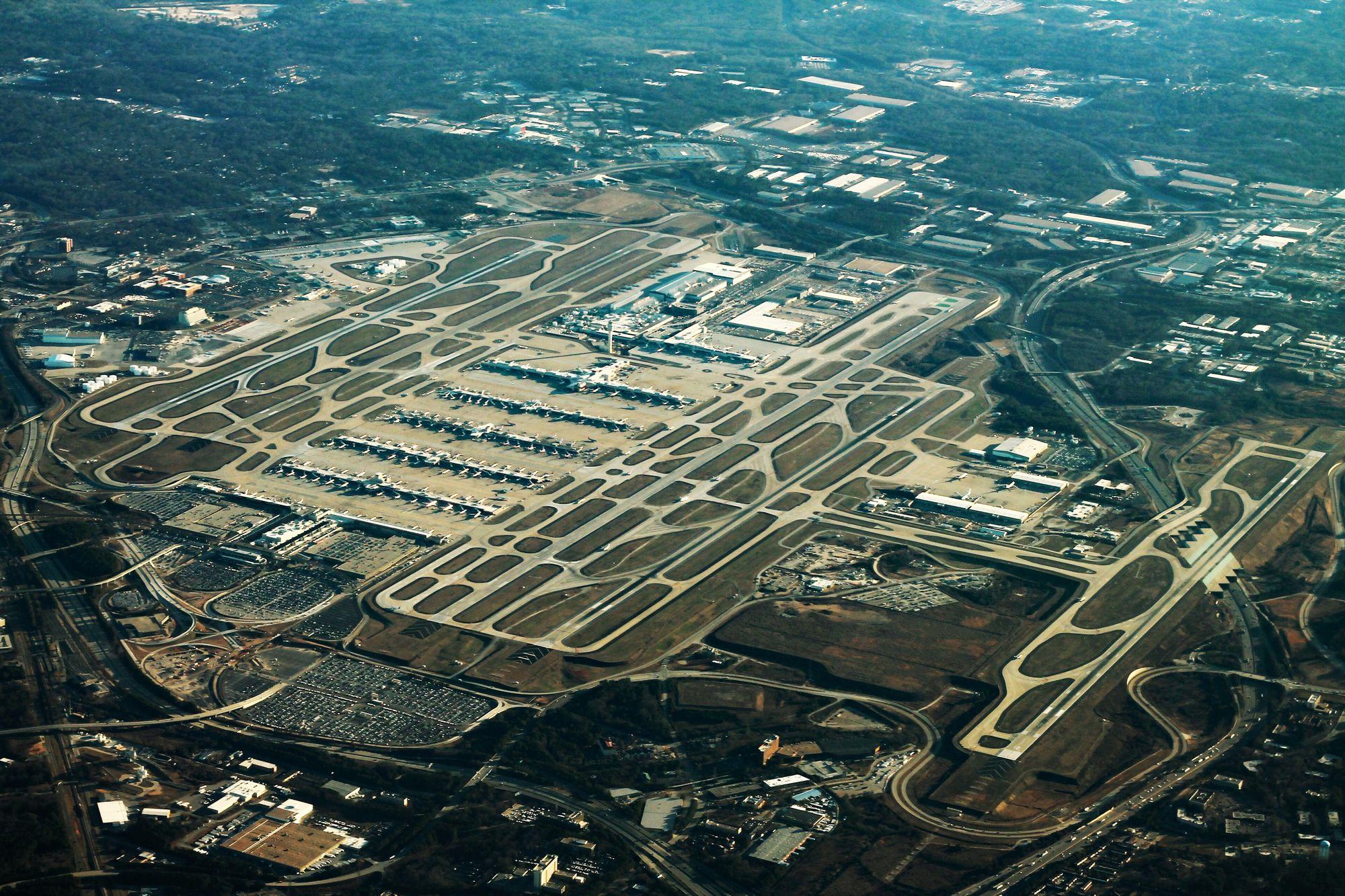
ACI World estimates that airports handled about 9.8 billion passengers in 2025, 7.3% more than in 2019. Our companion piece, Inside the World's Busiest Airports, explains how the largest of them cope.
Building new capacity is slow. Heathrow says it is operating at capacity, and its third runway, if approved, is now expected to open in 2039 rather than 2035, with planning permission targeted for 2029.
In the sky, Europe's summer was smoother than 2025's. EUROCONTROL's summer briefing shows an average of 35,959 flights a day from June to August, up 2.4%, while air traffic flow management delay fell 17% to 3.27 minutes per flight and 72.6% of arrivals were on time. But capacity and staffing shortfalls still caused 49% of en-route delay, and storms 43%. IATA, for its part, wants slot rules that do not penalise airlines when airspace closures or airport restrictions stop them flying.
Profits Halved, Challenges Ahead#
What the airlines will earn#
IATA's June outlook expects the world's airlines to earn $23.0 billion of net profit in 2026 on revenue of $1.165 trillion, a 2.0% margin. That is about half of 2025's $45 billion, and works out at roughly $4.50 per passenger, against $9.10 in 2025. Return on invested capital is forecast at 4.3%, well below the 8.5% cost of capital: airlines as a whole still do not earn enough to reward their investors.
The main challenges for 2026–27#
- Fuel and the Gulf. How quickly fuel costs ease depends largely on the Middle East conflict that drove IATA's downgrade.
- Aircraft and engines. Delivery shortfalls and engine inspections will keep capping growth; Wizz Air does not expect its engine problems to be fully resolved until the end of 2027.
- Infrastructure. New runways at hubs such as Heathrow take well over a decade to deliver, and staffing shortfalls still cause the largest share of Europe's en-route delay.
- The wider economy. IATA's June outlook assumed global growth slowing to 2.5%, with inflation at 5.0%.
- Deals and regulators. The Korean Air–Asiana merger goes live in December; Lufthansa's TAP purchase is not expected to close until 2028.
- Environmental costs. IATA puts the 2026 cost of the UN's CORSIA offsetting scheme at $1.2–1.6 billion and premiums for sustainable aviation fuel at about $4.3 billion, on top of Europe's carbon bill.
Conclusion: Running Hot on Thin Margins#
The planes are fuller than ever; the trouble is that there are not enough of them, and each one has become more expensive to fly.
Global aviation in late 2026 is running close to its physical and financial limits at the same time. The planes are fuller than ever; the trouble is that there are not enough of them, and each one has become more expensive to fly. Demand outside the Middle East is still growing, slowly, and every region bar one is still expected to make money. But with margins of about 2%, the industry has little room to absorb another shock, whether that comes from oil prices, a late engine fix or a crowded runway. The next twelve months will show whether 2026 was a pause in aviation's growth or the start of a longer squeeze.