What Happens When an Aircraft Encounters Severe Turbulence?
Why turbulence happens, how it is forecast, what aircraft are built to withstand, what investigators found after SQ321, and how passengers can stay safe.

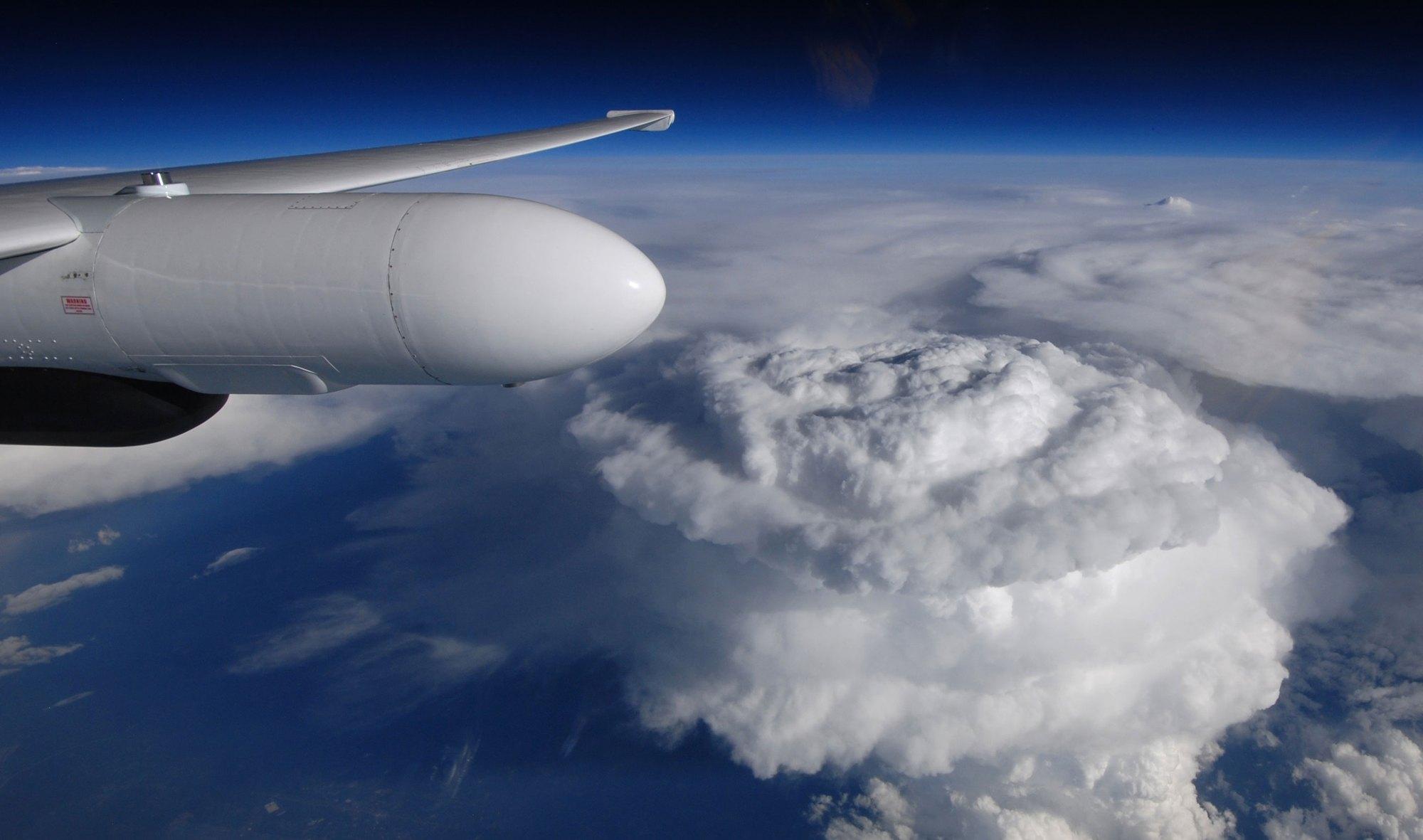
Photo: NASA / Stu Broce · Public domain
On this page
On 21 May 2024, Singapore Airlines flight SQ321, a Boeing 777 flying from London to Singapore, hit severe turbulence over Myanmar. In under five seconds the aircraft's vertical acceleration swung from pushing people into their seats to lifting them out of them, and back again. One person died and 79 were injured. Events like this are rare. But turbulence-related accidents are the most common type of accident on large US airliners, according to the US National Transportation Safety Board (NTSB), and those seriously hurt are overwhelmingly people who were not strapped in. Here is how turbulence forms, how it is forecast and avoided, and what investigators have learned.
Four Ways the Air Gets Rough#
Turbulence is air moving in eddies rather than smooth streams. The NTSB, in a 2021 safety research report, groups it by cause. The four that matter most to airliners are:
- Convective turbulence, produced by the strong updrafts and downdrafts in and around thunderstorms and towering cumulus clouds. The UK Met Office notes that it can be sudden and severe.
- Clear-air turbulence, caused by wind shear near the jet streams at cruising altitudes. It comes without visual cues such as cloud, which makes it hard to see or forecast.
- Mountain wave turbulence, which forms when stable air flows over mountain ranges, creating waves that can reach cruising altitudes far downwind.
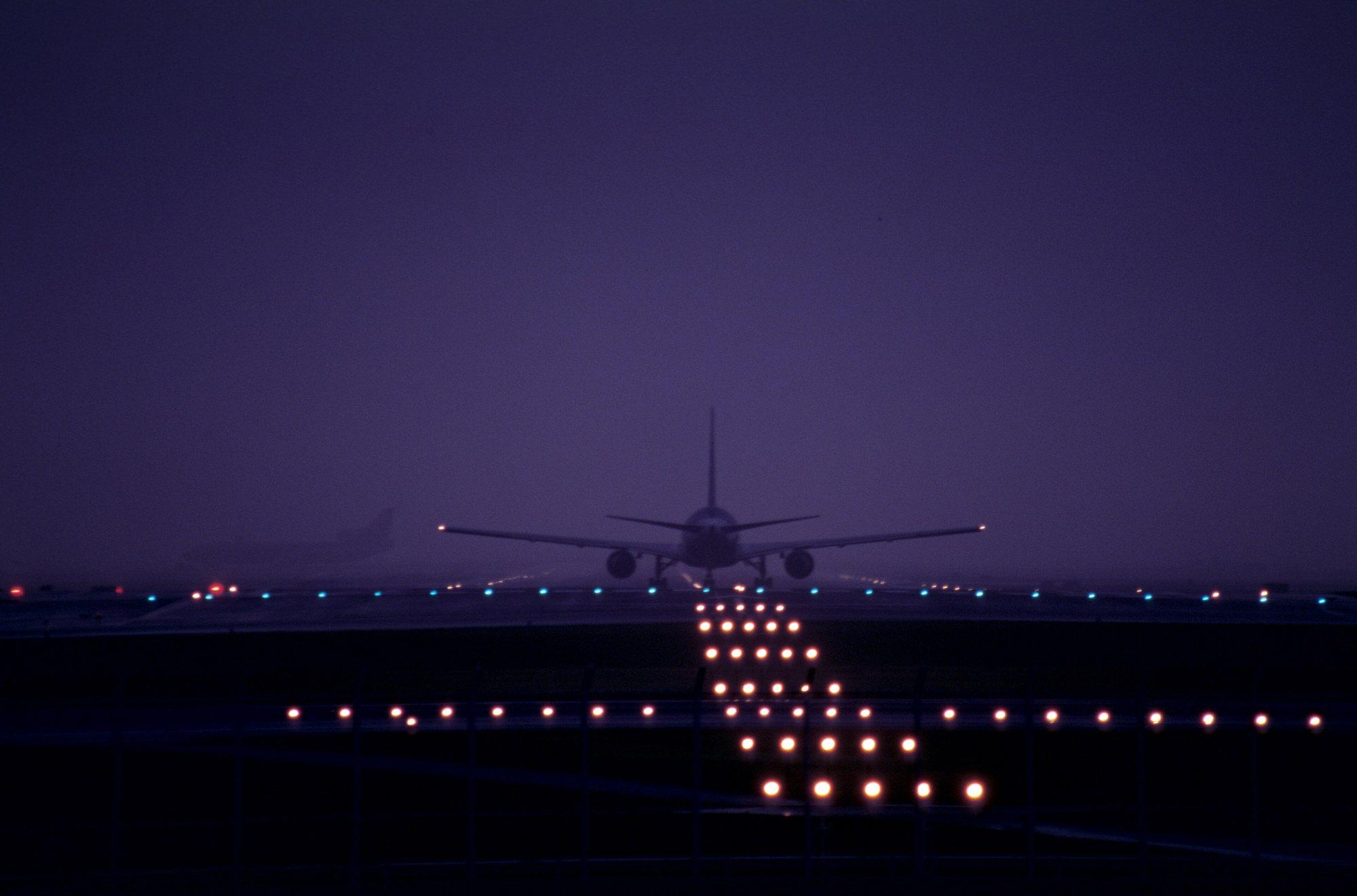
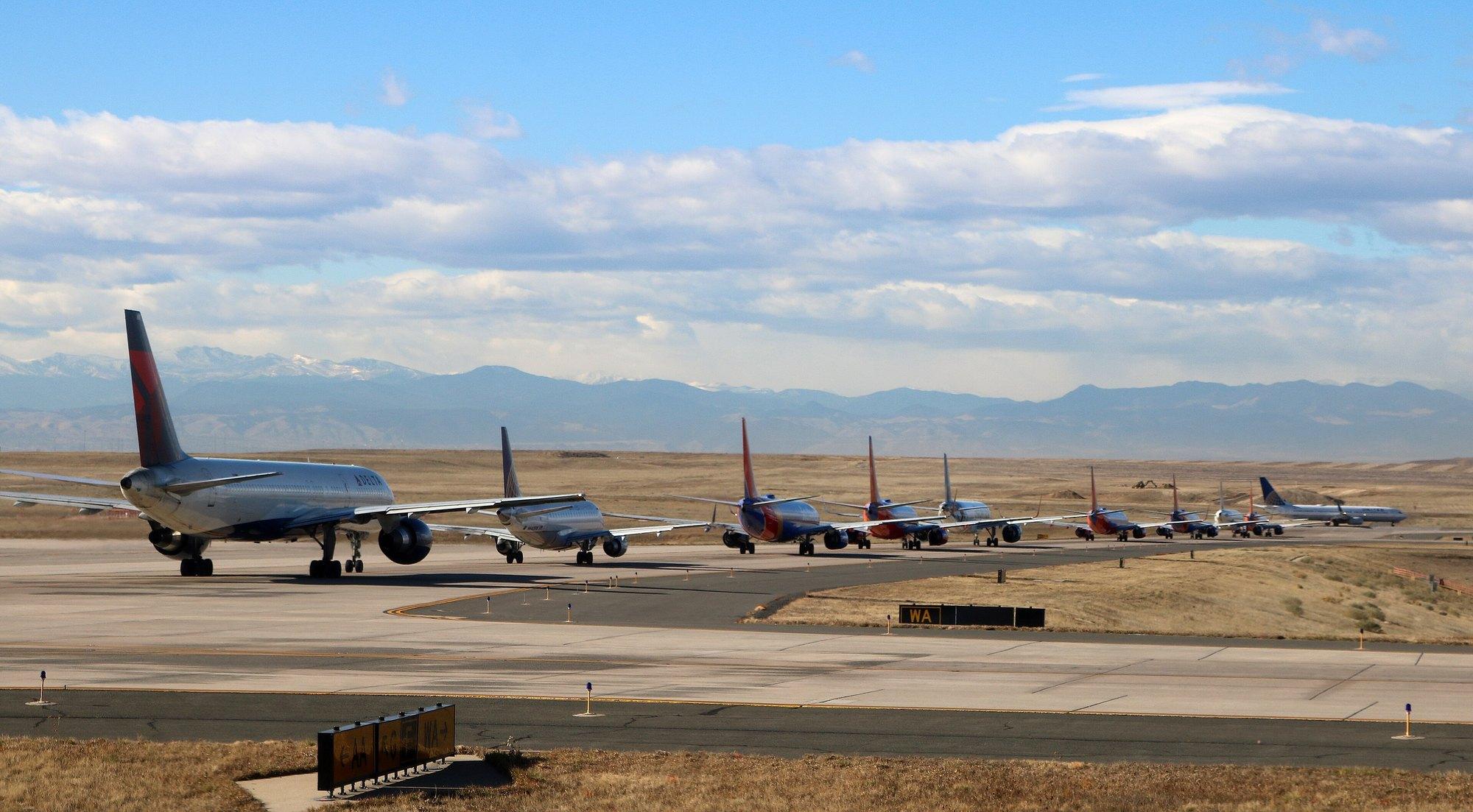
- Wake turbulence, the spinning vortices that trail behind every aircraft. It matters most near airports, where controllers keep minimum distances between aircraft.
Pilots grade turbulence on a four-level scale, defined by the FAA and summarised in the NTSB report:
| Intensity | What the aircraft does | What it feels like inside |
|---|---|---|
| Light | Slight, erratic changes in altitude or attitude | Slight strain against seat belts; walking is possible |
| Moderate | Larger changes, but the aircraft stays in positive control | Definite strain against belts; unsecured objects are dislodged; walking is difficult |
| Severe | Large, abrupt changes in altitude or attitude; may be momentarily out of control | Occupants forced violently against belts; objects tossed about; walking is impossible |
| Extreme | Violently tossed about and practically impossible to control; may cause structural damage | Not described separately |
Forecasting the Invisible#
In the United States, the National Weather Service issues warnings called SIGMETs for severe turbulence and AIRMETs for moderate turbulence, alongside the computer-generated Graphical Turbulence Guidance. As the NTSB's report described it, that guidance forecasts clear-air and mountain wave turbulence at many altitudes up to 18 hours ahead, updated hourly; the Aviation Weather Center now also shows a convective turbulence layer over the continental US. Its output is expressed as eddy dissipation rate (EDR), a measure of the turbulence in the atmosphere itself rather than of how a particular aircraft responds. Because the same patch of air shakes a light jet more than a jumbo, the Aviation Weather Center sets different EDR thresholds for "severe" for light, medium and heavy aircraft.
Pilots file reports, known as PIREPs, describing what they encounter, usually by radio to air traffic control. Many aircraft also measure EDR automatically and send it to the ground. Through IATA's Turbulence Aware platform, participating airlines pool these automated reports and can receive them in real time.
Forecasting has limits. Onboard weather radar detects precipitation, so it can show thunderstorms but not the clear air around a jet stream. Forecast models work on grids several kilometres wide, and turbulence can be patchier than that. The NTSB also found that pilot reports were not shared consistently and that many forecasting products were proprietary.
In the Cockpit and the Cabin#
Dispatchers and pilots plan routes and altitudes around forecast turbulence. In flight, pilots use radar and their own eyes to steer around storm cells, ask controllers for smoother altitudes and listen to reports from aircraft ahead. They switch on the seat belt sign and, when the warning is strong enough, tell cabin crew to stop service and sit down.
When turbulence hits unexpectedly, the priorities are speed and restraint: slowing to the aircraft's recommended turbulence speed and getting everyone seated. During SQ321, the pilot in command slowed to 0.82 Mach, the recommended turbulence speed, and switched on the seat belt sign, according to The Straits Times' account of the final report.
The NTSB's data show when the cabin is most exposed. From 2009 to 2018, about half of turbulence-related accidents on large US airliners happened during descent or approach, and the NTSB says 60% of these accidents occurred below 20,000 feet. The most common activity of seriously injured flight attendants was preparing the cabin for landing.
Strong Aircraft, Vulnerable People#
Built to bend: design loads and certification#
US certification rules for large aircraft, which European rules closely mirror, set several layers of protection:
- Gust loads. Under 14 CFR 25.341, the aircraft must be analysed for sudden vertical and lateral gusts of up to 56 feet per second at sea level, reducing with altitude, and for continuous turbulence.
- Manoeuvring loads. Under 25.337, the structure must be designed for manoeuvring loads of at least +2.5g and down to −1.0g up to the aircraft's design cruising speed.
- Safety factor. Under 25.303, designers must multiply these "limit loads" by 1.5 to get the "ultimate loads" the structure must be strong enough to carry.
These are design requirements, not a description of any one flight: the loads a real gust imposes depend on the aircraft's speed and weight and on the shape of the gust. The record, though, is reassuring. Of the 111 turbulence-related accidents on large US airliners between 2009 and 2018, 106 caused no damage to the aircraft at all, and the other five caused only minor damage, according to the NTSB.
What the injury numbers show#
The figures below come from the United States, where airlines must report serious injuries to the NTSB.
| Measure (US airlines, Part 121) | Figure | Source |
|---|---|---|
| Seriously injured people, 2009–2018 | 123 | NTSB |
| Of whom flight attendants | 97 (78.9%) | NTSB |
| Seriously injured passengers known to be wearing a seat belt | 1 of 26 | NTSB |
| Serious turbulence injuries, 2009–2024 | 207 | FAA |
Flight attendants are hurt far more often than passengers, largely because they are more often on their feet. Among the 97 seriously injured flight attendants, 81 were documented as not wearing seat belts. The most common activity among injured passengers was using, waiting for or walking to or from the lavatory. The FAA's turbulence safety page shows the pattern continuing through 2024, with crew members making up the large majority of serious injuries.
Two Investigations, Two Lessons#
SQ321, Myanmar, May 2024. Singapore's Transport Safety Investigation Bureau (TSIB) published preliminary findings eight days after the event. The aircraft was cruising at 37,000 feet, probably over developing convective activity, when an updraft pushed it up to 37,362 feet. The seat belt sign was switched on. Eight seconds later, vertical acceleration fell from +1.35g to −1.5g in 0.6 seconds, likely lifting unbelted occupants out of their seats, then rose to +1.5g within four seconds, likely bringing them back down. Over those 4.6 seconds, the aircraft lost 178 feet. It diverted to Bangkok.
The TSIB's final report was released on 19 May 2026. As reported by The Straits Times, it found the turbulence was likely caused by a rapidly growing cloud. The pilots saw no clouds ahead and their radar showed no precipitation, while three of four other aircraft nearby saw widespread cloud and deviated around it.
Hawaiian Airlines flight 35, December 2022. On a flight from Phoenix to Honolulu, turbulence seriously injured three passengers and one crew member, with 20 people injured in all. The NTSB's final report, as reported by the Associated Press, gave the probable cause as the crew's decision to fly over an observed storm cell instead of deviating around it, despite forecasts warning of possible severe turbulence.
Both involved convective weather, and together they show why crews give storm cells a wide berth, and why a blank radar screen is not proof of smooth air.
Is Climate Change Making It Worse?#
There is growing evidence that clear-air turbulence is becoming more common. A 2023 study by University of Reading researchers, published in Geophysical Research Letters, found that at a typical point over the North Atlantic, the annual duration of severe clear-air turbulence rose 55% between 1979 and 2020, from 17.7 to 27.4 hours. Moderate turbulence rose 37% and light turbulence 17%, the university reported. The authors attribute the rise to climate change strengthening wind shear in the jet streams.
The Met Office adds that a warmer atmosphere holds more moisture, which can intensify thunderstorms, but says the link between climate change and mountain wave turbulence remains an emerging area of research. Two caveats matter. The 55% figure describes one representative location, not every route. And it describes turbulence conditions in the atmosphere, not how often aircraft encountered them or people were hurt.
How Passengers Can Stay Safe#
- Keep your seat belt fastened whenever you are seated, not only when the sign is on. The NTSB calls being seated with the belt fastened the most effective way to prevent a turbulence injury.
- Follow crew instructions immediately. When the sign comes on, return to your seat.
- Limit time in the aisle and at the lavatory, especially when the aircraft is descending.
- Use an approved child seat for children under two. The FAA says that is the safest place for them, and the NTSB has urged regulators and airlines to increase their use.
- Stow bags properly so that they cannot become projectiles.
Conclusion: Rare, Survivable and Mostly Preventable#
In severe turbulence, the aircraft is rarely the weak point; an unfastened seat belt usually is.
Severe turbulence is frightening, and occasionally it is deadly, as SQ321 showed. But aircraft are built for it, crews are trained for it, and forecasting is improving. The official records show that serious injuries happen overwhelmingly to people who are standing or unbelted. In severe turbulence, the aircraft is rarely the weak point; an unfastened seat belt usually is. If turbulence is becoming more common, as research suggests, that simple habit will matter even more.