How AI and Automation Are Changing Aviation
Autopilots are a century old. What AI now adds to maintenance, air traffic control and airports, how regulators are responding, and the single-pilot debate.

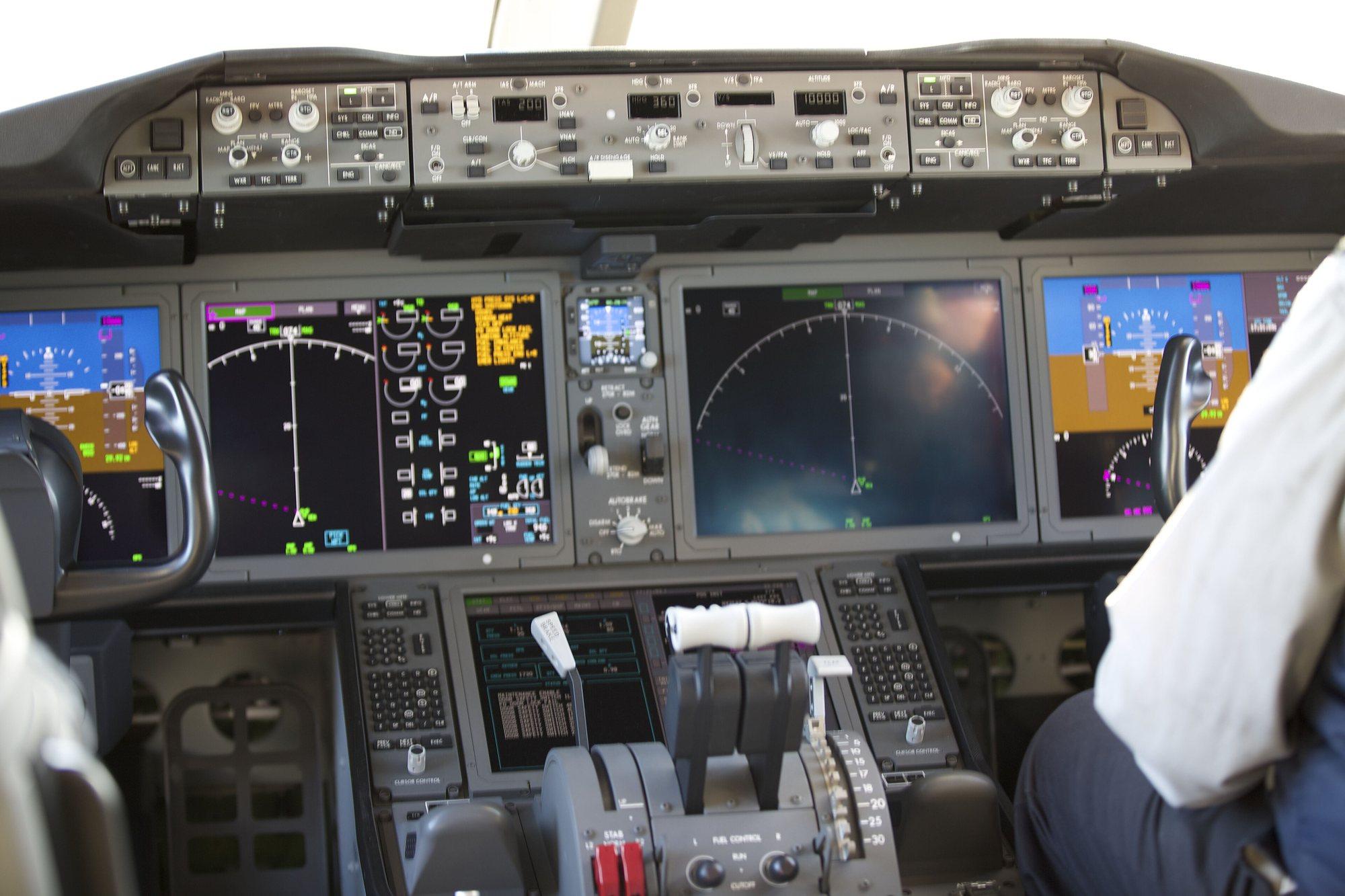
Photo: Pablo Fernicola · CC BY 2.0
On this page
Passengers often imagine that artificial intelligence is about to arrive in the cockpit. In reality, machines have been flying aircraft for more than a century, and today's airliners already land themselves in fog. What is new is a different kind of software: systems that learn patterns from data rather than following rules an engineer wrote down. That shift is reaching aviation from the edges inward, through maintenance hangars, pricing desks, air traffic flow centres and airport gates, long before it touches the controls. This analysis separates what is deployed today from what is being trialled or promised, looks at how European and American regulators intend to certify it, and weighs the most contested idea of all: flying big jets with fewer pilots.
A Century of Letting the Machine Fly#
Automation is aviation's oldest companion. In 1914 Lawrence Sperry demonstrated a gyroscopic autopilot at an aviation safety contest in Paris, flying with his hands visibly away from the controls. Half a century later, automatic landing entered airline service.
Today autoland is used on airliners mainly when visibility is too poor for a visual landing, with pilots monitoring and ready to take over. The technology has also reached small aircraft as an emergency tool. On 20 December 2025 a Beechcraft Super King Air landed itself at Rocky Mountain Metropolitan Airport near Denver using Garmin's Autoland system, in what Garmin called the first use of Autoland from start to finish in an actual emergency. ABC News reported that more than 1,700 in-service aircraft carry the system.
The crucial point is that autopilots and autoland are conventional automation: rule-based software whose intended behaviour is written down in advance and tested against those requirements. Machine learning is different, and the industry's experiments with it are still mostly research. In 2020 Airbus completed its ATTOL project, in which a commercial aircraft taxied, took off and landed autonomously using on-board image recognition and machine learning, after more than 500 test flights. Airbus framed the aim as letting pilots spend less effort on operating the aircraft and more on strategic decision-making.
Where AI Already Earns Its Keep: Maintenance and Money#
The least glamorous uses of AI are the furthest along. Airlines generate huge volumes of sensor and maintenance data, and predictive tools try to spot a failing part before it causes a delay. Lufthansa Technik, for example, markets its AVIATAR platform as using analytical models to forecast failure probabilities for individual components. EASA lists predictive maintenance and safety data analysis among the areas where AI is already being explored. Lufthansa Technik's page promises more reliable operations and lower costs without quantifying them; such claims are best treated as marketing until independently measured.
Pricing is an older story. Airlines have priced seats algorithmically since the 1980s: American Airlines launched capacity-controlled "Ultimate Super Saver" fares in January 1985 to fight low-cost rival People Express, a milestone in what became known as yield or revenue management. Machine learning extends those systems' demand forecasting. The sensitive question is whether pricing drifts from forecasting demand toward profiling individuals. The US Federal Trade Commission's January 2025 interim study of "surveillance pricing" found that personal data such as location and browsing history can be used to show different consumers different prices. The study did not name airlines, but it shows where regulators' attention is heading.
From the Control Room to the Boarding Gate#
Air traffic management is one of the places where AI is genuinely deployed rather than promised, though mostly in planning rather than real-time separation of aircraft. EUROCONTROL, the European air navigation organisation, says its operational systems "already rely on several AI applications" at its Maastricht Upper Area Control Centre and Network Manager, including traffic forecasts, automated flight-plan processing, curfew-infringement prevention and better climb and descent predictions. More than 30 further applications, from conflict detection to speech-to-text for controllers, are in its research or fast-track pipeline.
| Application | Status | Example |
|---|---|---|
| Autopilot and autoland on airliners | Deployed for decades | Trident autoland, 1965 |
| Emergency autoland in small aircraft | Deployed; first real emergency use in 2025 | Garmin Autoland |
| Traffic forecasting and flight-plan processing | Deployed | EUROCONTROL Network Manager, Maastricht |
| Facial-recognition boarding | Deployed | India's Digi Yatra |
| Predictive maintenance analytics | Deployed commercially; benefits mostly vendor-reported | Lufthansa Technik AVIATAR |
| AI conflict detection, speech-to-text for controllers | Research and trials | EUROCONTROL pipeline |
| Vision-based autonomous take-off and landing | Research demonstrations | Airbus ATTOL (2020) |
| Single-pilot cruise or fully autonomous airliners | Proposed and debated; not approved | EASA eMCO research |
At airports, the most visible change is biometrics. India's Digi Yatra, launched on 1 December 2022 at Delhi, Bengaluru and Varanasi, uses facial recognition to verify passengers at check-in, security and boarding gates without physical documents, according to Wikipedia's summary. It is run by the not-for-profit Digi Yatra Foundation, in which five private airport operators each hold 14.8%, and now handles the biometric data of millions of domestic passengers each month.
Convenience has come with consent questions. A January 2024 LocalCircles survey found that almost a third of enrolled passengers had been signed up without knowing it, while the civil aviation minister of the time said consent was a prerequisite.
The Rulebook Catches Up#
Regulators are trying to certify software that cannot be fully described by its requirements. EASA published its first AI roadmap in 2020 and a human-centric Roadmap 2.0 in May 2023. It sorts AI into levels by the human's role: Level 1 assists people, Level 2 covers human-AI teaming in which the system can act under human oversight, and Level 3 is advanced automation with limited or no real-time human intervention.
On 10 November 2025 EASA opened consultation on NPA 2025-07, its first regulatory proposal on AI. It sets out "AI trustworthiness" specifications aligned with the EU AI Act's rules for high-risk systems, covers only Level 1 and Level 2, and is limited to supervised and unsupervised machine learning. EASA says the framework will later extend to reinforcement learning and generative AI.
In the US, the FAA published its first Roadmap for Artificial Intelligence Safety Assurance in 2024. Its guiding principles include avoiding personification, treating AI as a tool so that accountability stays with people; distinguishing "learned" AI, frozen before deployment, from "learning" AI that keeps changing; and taking an incremental approach.
One Pilot or Two? The Fight Over the Flight Deck#
The most contested idea is reducing the crew on large jets. Under extended minimum-crew operations (eMCO), one pilot would fly the cruise alone while the other sleeps; single-pilot operations (SiPO) would go further. According to EASA-commissioned research, aircraft manufacturers have expressed interest in eMCO, arguing that existing cockpit automation could support it.
That research, carried out by the Dutch and German aerospace centres NLR and DLR between 2022 and 2025, concluded that there will be situations in which an equivalent level of safety to two-pilot operations "cannot be demonstrated." It found that technology to detect pilot incapacitation does not yet match a second human, that pilots may suffer sleep inertia for up to 35 minutes after waking, and that no technical or procedural fix had been found to replace the cross-checking two pilots provide. EASA says its rulemaking will now focus on advanced flight deck technologies for current two-pilot operations.
Pilots' organisations took part in the project, and its stakeholder report noted that the topic proved "very sensitive", drawing attention especially from professional associations and unions.
Risks and Limits of Learning Machines#
AI introduces failure modes that classic automation did not. EASA's 2026 briefing to Asia-Pacific regulators warns that a machine-learning system's behaviour depends heavily on its training and operational data, can be sensitive to changes in operating context, data quality, cyber threats or model updates, and invites both over-trust and under-trust from the people using it. It adds that simply placing a human "in the loop" is not enough without a realistic role, training and the ability to override.
Even mature automation has edges. Garmin says Autoland will not work if an aircraft has mechanical problems, has run out of fuel, or has flight controls that cannot move freely. In the December 2025 Colorado landing, the system's synthesised radio message declared pilot incapacitation, but the operator later said neither pilot was incapacitated and that they had chosen to keep the system engaged after a loss of cabin pressure. The FAA and NTSB both looked into the event. A machine that lands safely can still tell the world something untrue.
Conclusion: Augmentation Now, Autonomy Later#
Aviation's AI story is less a revolution than a slow absorption. The deployed systems help planners forecast traffic, engineers anticipate failures, revenue managers price seats and airports verify faces; the experimental ones, such as vision-based landing, remain research. Regulators on both sides of the Atlantic have chosen an incremental path that keeps humans accountable, and EASA's own assessment is that near-term uses will be "incremental rather than dramatic." The biggest leaps, single-pilot airliners and autonomous passenger jets, are still promises that the evidence does not yet support. Our expectation: passengers will notice AI at the boarding gate and in their fares long before they notice it in the cockpit.