Inside the World's Busiest Airports
Atlanta handled 106 million passengers in 2025. How mega-airports move people, bags and aircraft, from security and slots to control towers and de-icing.

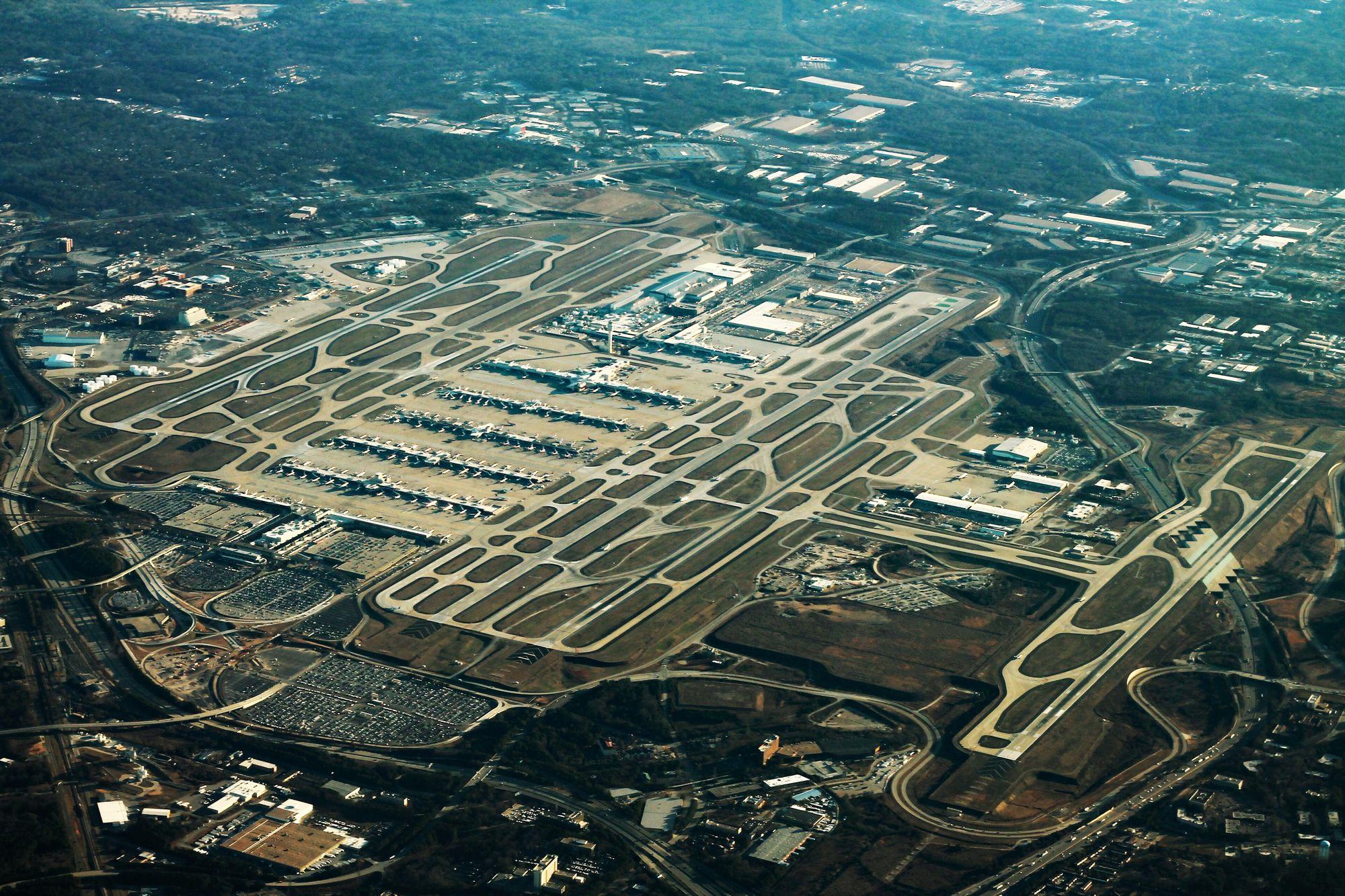
Photo: formulanone from Huntsville, United States · CC BY-SA 2.0
On this page
Hartsfield-Jackson Atlanta International handled 106.3 million passengers in 2025, roughly 290,000 a day on average. Dubai International handled 95.2 million, every one of them on an international flight. Numbers like these are hard to picture, and harder still to manage: each passenger has to be checked in, screened and walked to the right gate, each bag has to find the right aircraft, and each flight needs a turn on the runway, a parking stand and a controller's attention. Here is the latest ranking of the world's busiest airports, and a tour of the systems that keep them moving, from the kerb to the runway and back.
The 2025 League Table#
The ranking below comes from ACI World, the global association of airport operators. It released preliminary 2025 rankings in April 2026 and publishes the fuller tables on its rankings page, which carries the figures below.
| Rank 2025 | Airport | Passengers 2025 | Change vs 2024 | Rank 2024 |
|---|---|---|---|---|
| 1 | Atlanta (ATL), United States | 106.3m | −1.6% | 1 |
| 2 | Dubai (DXB), United Arab Emirates | 95.2m | +3.1% | 2 |
| 3 | Tokyo Haneda (HND), Japan | 91.7m | +6.7% | 4 |
| 4 | Dallas/Fort Worth (DFW), United States | 85.7m | −2.5% | 3 |
| 5 | Shanghai Pudong (PVG), China | 85.0m | +10.7% | 10 |
| 6 | Chicago O'Hare (ORD), United States | 84.9m | +6.0% | 8 |
| 7 | London Heathrow (LHR), United Kingdom | 84.5m | +0.7% | 5 |
| 8 | Istanbul (IST), Türkiye | 84.4m | +5.5% | 7 |
| 9 | Guangzhou (CAN), China | 83.6m | +9.5% | 12 |
| 10 | Denver (DEN), United States | 82.4m | +0.1% | 6 |
Four of the top ten are in the United States, and ACI notes that each of those handles 80–95% domestic traffic, fed by a vast internal market. Dubai tops the international ranking, ahead of Heathrow and Incheon. Chicago O'Hare is the busiest by aircraft movements, with 857,392 take-offs and landings, ahead of Atlanta. Delhi, which ranked ninth in 2024, slipped to eleventh with 78.1 million passengers.
From Kerb to Gate: Terminals and Security#
A mega-airport is designed around flows. Departing passengers move one way through check-in, security and passport control; arrivals move the other way through immigration, baggage reclaim and customs; and connecting passengers need a third path that keeps them airside. The bigger the airport, the longer the walk, so the largest hubs move people mechanically.
Atlanta is a good example. Its passenger terminals connect to seven concourses through an underground people mover, the Plane Train. According to the airport's fact sheet, eleven four-car trains run on a three-mile loop, arriving about every two minutes and carrying more than 200,000 passengers a day.
Security is the other great bottleneck, because every departing passenger and every piece of hand luggage must be screened. Airports track how long that takes. In the first half of 2026, Dubai International reported that 99.34% of passengers cleared security in under five minutes, and that almost 99% of departing passengers passed through passport control in under ten minutes, Khaleej Times reported.
The Hidden Railway for Bags#
Below the floors of a big terminal runs a second transport network for luggage. At Dubai International, the ground handler dnata says baggage tracks total more than 175 kilometres across the airport's three terminals, 160 kilometres of them under Terminal 3 alone.
The system works like an automated railway. Each bag rides in its own tray, linked to its luggage tag. Bags travel at up to 2.5 metres a second, and up to 7.5 metres a second in a transfer tunnel. Along the way they are screened up to five times, then routed to a container for loading. Bags checked in early wait in an automated store with room for 15,000 items. Oversized items such as televisions and car seats, about 5% of baggage, are handled by hand. At peak times, more than 1,300 dnata staff work the operation.
The measure that matters to passengers is how often bags go astray. Dubai Airports reported 2.7 mishandled bags per 1,000 passengers in the first half of 2026, against a global benchmark of about 4.9.
Runways, Slots and the Limits of Concrete#
However big the terminal, an airport can only handle as many flights as its runways allow. Heathrow shows the problem clearly. It handled 480,005 take-offs and landings in 2025 on its two runways, according to ACI's figures, and describes itself as operating at capacity. A third runway, if approved, is now expected to open in 2039. Atlanta, with five runways according to its fact sheet, handled 807,625 movements.
Taxiways matter too. In July 2023, Delhi opened a fourth runway together with the Eastern Cross Taxiway, a 2.1-kilometre elevated taxiway over a terminal access road, wide enough for the largest jets. It cut the taxi distance from one runway to Terminals 1 and 2 from 9 kilometres to 2, saving about 350 kilograms of fuel per aircraft, and was expected to raise daily movements from about 1,500 to 2,000.
When demand outstrips capacity, airports ration it with slots. IATA defines a slot as permission to arrive or depart at a specific time. More than 200 airports worldwide are fully coordinated "Level 3" airports, and about half of all passengers depart from one. Slots are allocated by independent coordinators each season. An airline that uses a series of slots at least 80% of the time can usually keep them the next year, and new entrants get priority for at least half of any slots in the pool.
Who Is Talking to the Pilots#
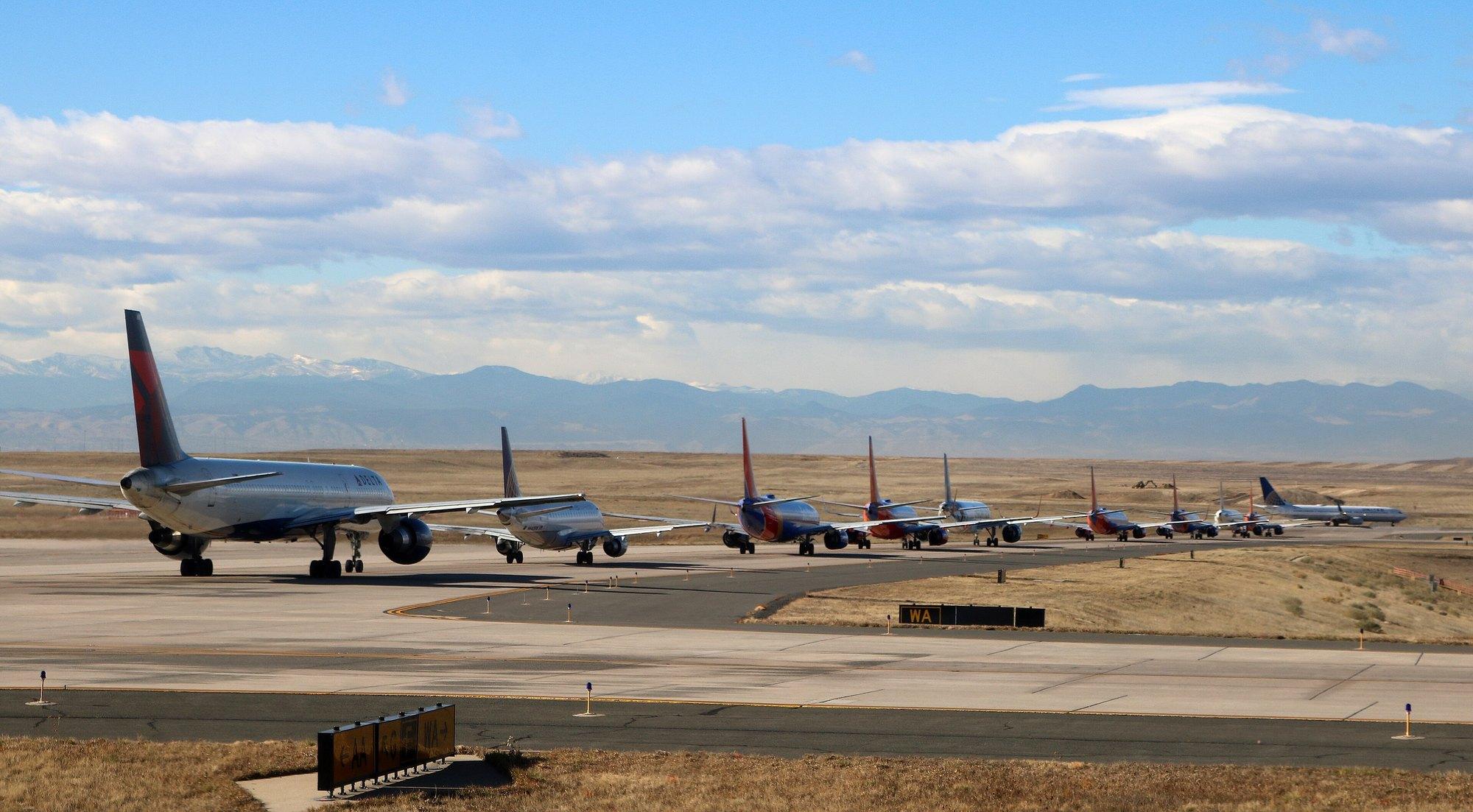
A departing airliner at a big airport speaks to a chain of controllers. Clearance delivery confirms its route; ground control steers it along the taxiways; the tower clears it onto the runway and into the air; and radar controllers then guide the climb before handing it to en-route centres. Arrivals run the same chain in reverse.
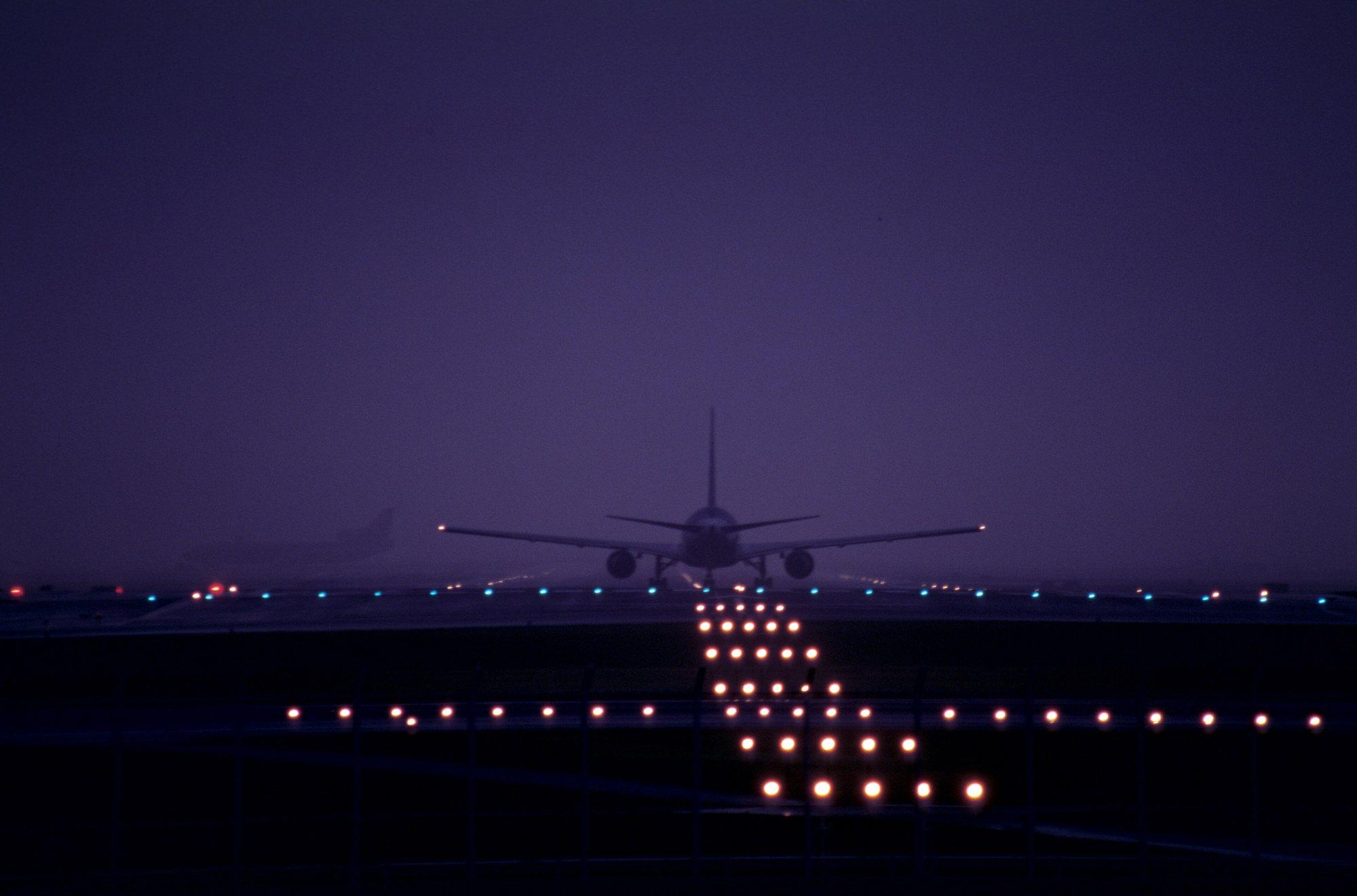
The arrival end is where queues form. Heathrow has four permanent holding stacks, according to NATS, the UK's air navigation service. These are racetrack-shaped patterns in which aircraft typically enter at around 15,000 feet and leave at around 7,000 feet, with levels normally 1,000 feet apart, so up to eight aircraft can hold at once. Holding is triggered by bunched arrivals, by weather such as fog, low cloud or strong winds that cut landing rates, or by problems on the runway.
Across a whole continent, the queue is managed before take-off. In Europe, EUROCONTROL issues flow-management delays when airspace sectors or airports are short of capacity. Over summer 2026 that delay averaged 3.27 minutes per flight, with an average of 35,959 flights a day.
The Turnaround and the Hub Bank#
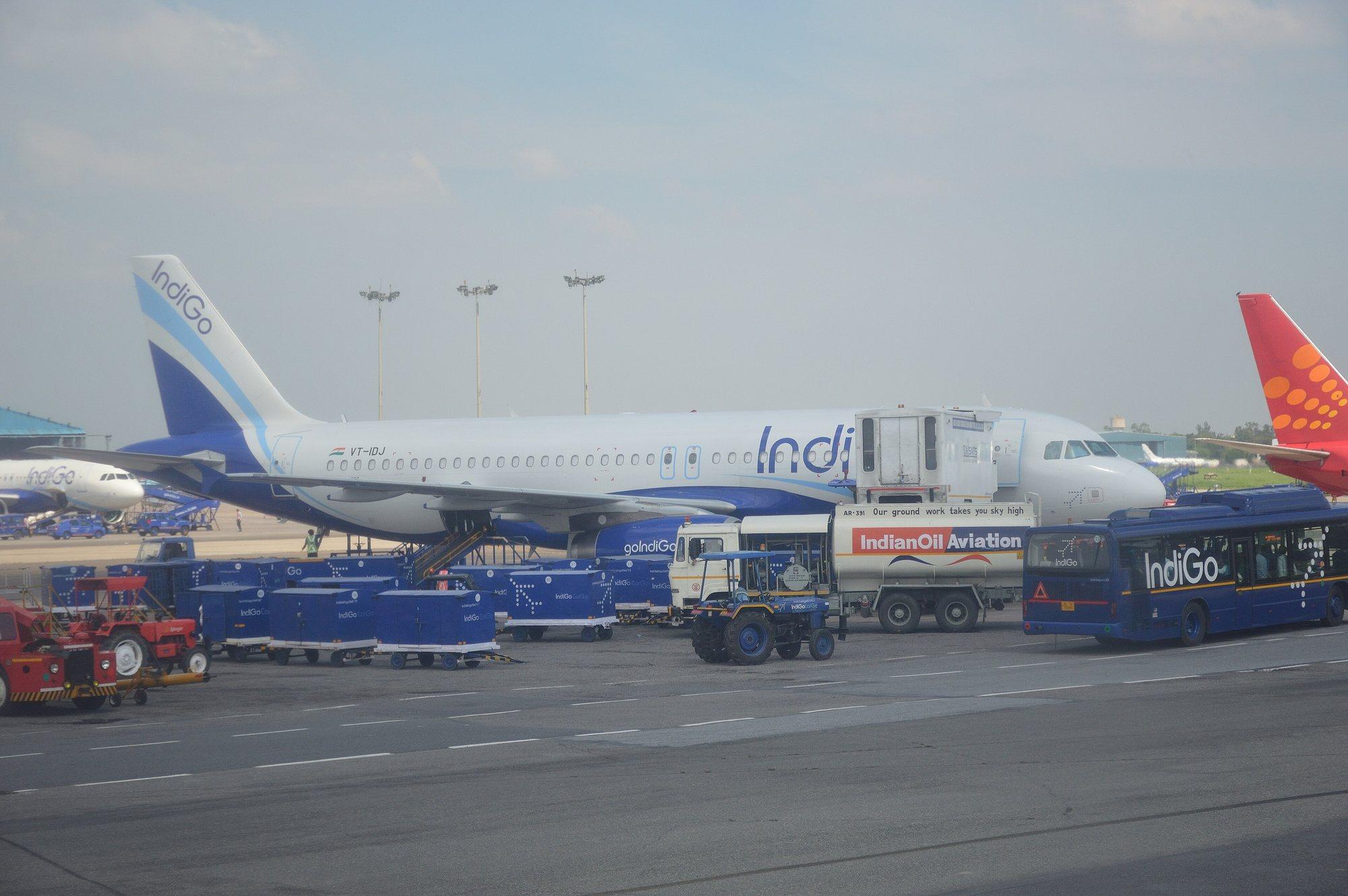
Once an aircraft reaches its stand, a tightly choreographed turnaround begins. Chocks go under the wheels, a jet bridge or stairs connect to the door, and a ground power unit or fixed supply takes over from the aircraft's own generator. Baggage tugs, belt loaders and container loaders unload the hold while cleaners, caterers, fuel trucks and water and waste vehicles work around the aircraft. Then the process reverses, and a pushback tug moves the aircraft back from the stand. Any vehicle that arrives late can delay the departure.
Hub airports add another layer: timing. Hub airlines schedule waves, or banks, of arrivals followed soon after by waves of departures, so that passengers from many cities can connect onto many others. In Dubai, 64% of passengers arriving at Terminal 3 in 2022 were in transit, according to dnata, which begins preparing for transfer bags six hours before an aircraft lands, using data on their number, size, weight and destination.
When the Weather Turns#
Weather is one of the biggest causes of delay. EUROCONTROL attributes 43% of Europe's en-route flow delay in summer 2026 to severe convective weather such as thunderstorms, second only to capacity and staffing shortfalls.
Winter brings de-icing. An aircraft must take off with clean wings, because frost, ice or snow disrupt the airflow that generates lift. NASA's pilot guide to ground icing explains the two jobs: de-icing removes contamination, usually with heated, thin Type I fluid, while anti-icing applies a protective layer, often a thickened Type II or IV fluid typically 1–3 millimetres deep. That protection lasts only for a "holdover time", whose clock starts when the final application begins, so the aircraft must taxi and take off before it expires. In heavy snow, that clock adds a hard deadline to every departure.
Disruption can also come from far beyond the weather. When war broke out in the Gulf at the end of February 2026, airports closed temporarily and airlines suspended flights. Dubai International handled 31.5 million passengers in the first half of the year, 31.3% fewer than a year earlier.
Conclusion: Cities That Never Close#
The world's busiest airports are less like buildings than like small cities, with their own railways, traffic police and weather plans. Their capacity is set by the scarcest resource, whether runway time, security lanes or the minutes a de-icing fluid lasts on a wing.
An airport is only as fast as its slowest queue, and the busiest ones are built to make sure no single queue gets too long.
Most of the time the system is invisible to passengers. An airport is only as fast as its slowest queue, and the busiest ones are built to make sure no single queue gets too long. As traffic keeps growing and new runways can take decades to approve and build, how well airports manage those queues will matter as much as how big they are. For the wider state of the industry, see The State of World Aviation.