The Return of the Airship? Zeppelins, Past and Future
From the Graf Zeppelin to Pathfinder 1: the airship's golden age, the Hindenburg's legacy, and where today's helium-filled revival really stands.

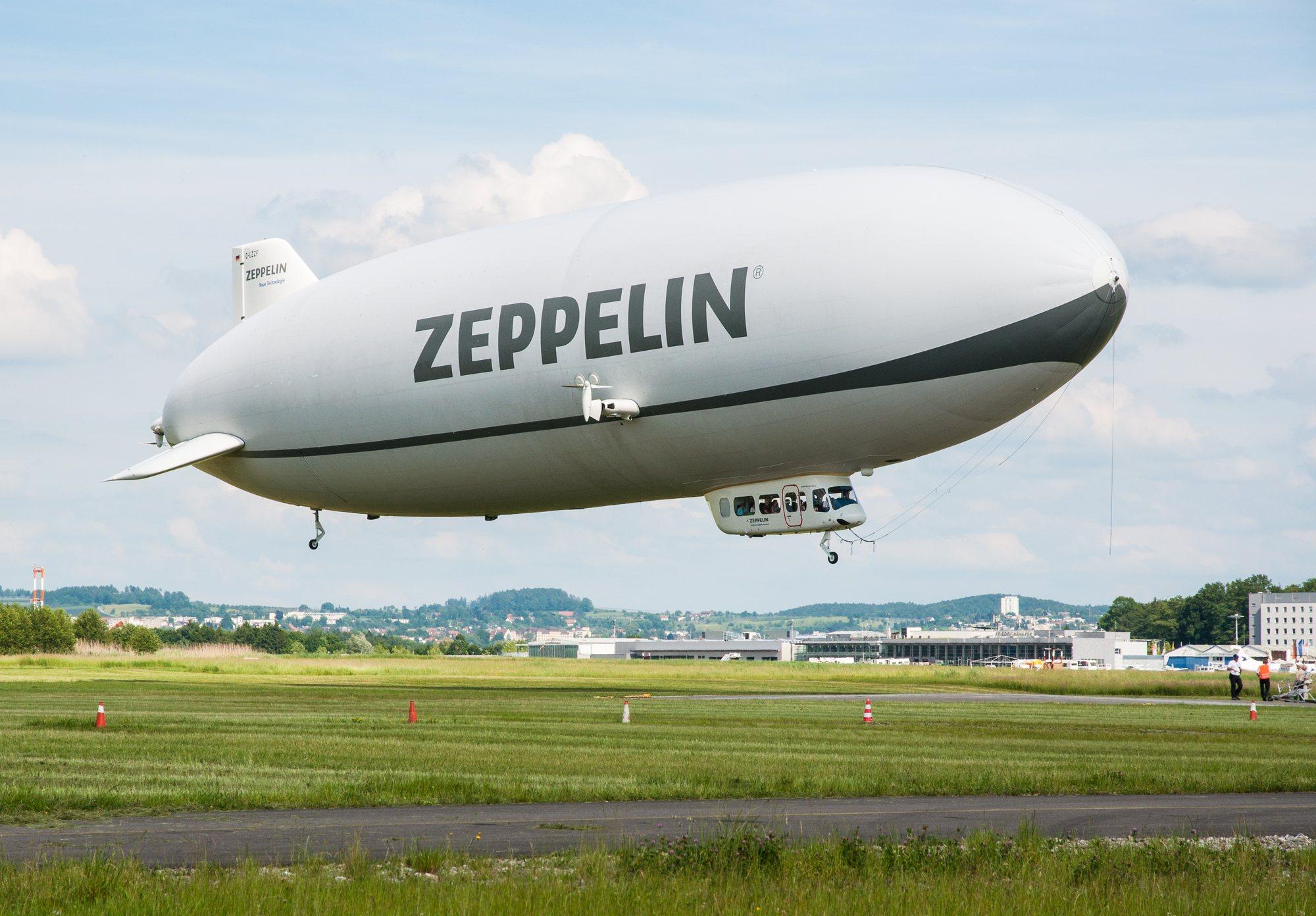
Photo: DKrieger · CC BY-SA 3.0
On this page
For a few years between the world wars, passengers could cross the Atlantic on a timetable, carried beneath a vast envelope of gas. Then, in May 1937, the Hindenburg burned at Lakehurst, New Jersey, and the era of the great passenger airship came to an end. Nearly nine decades later, airships are back in the headlines. A 406-foot rigid airship is flying test missions over San Francisco Bay, British and French companies are promising hybrid and cargo airships, and Zeppelins still carry sightseers over Lake Constance. This article looks at what the airship achieved, why it disappeared, and which parts of today's revival are real flights and which are still company targets.
The Graf Zeppelin and the Golden Age of Airships#
One of the most successful airships ever built was LZ 127 Graf Zeppelin, christened on 8 July 1928 by the daughter of Count Ferdinand von Zeppelin. According to aviation historian Dan Grossman's Airships.net, it flew more than a million miles on 590 flights during a nine-year career and carried over 34,000 passengers without a single injury. It also made the first regularly scheduled transatlantic passenger crossings by air.
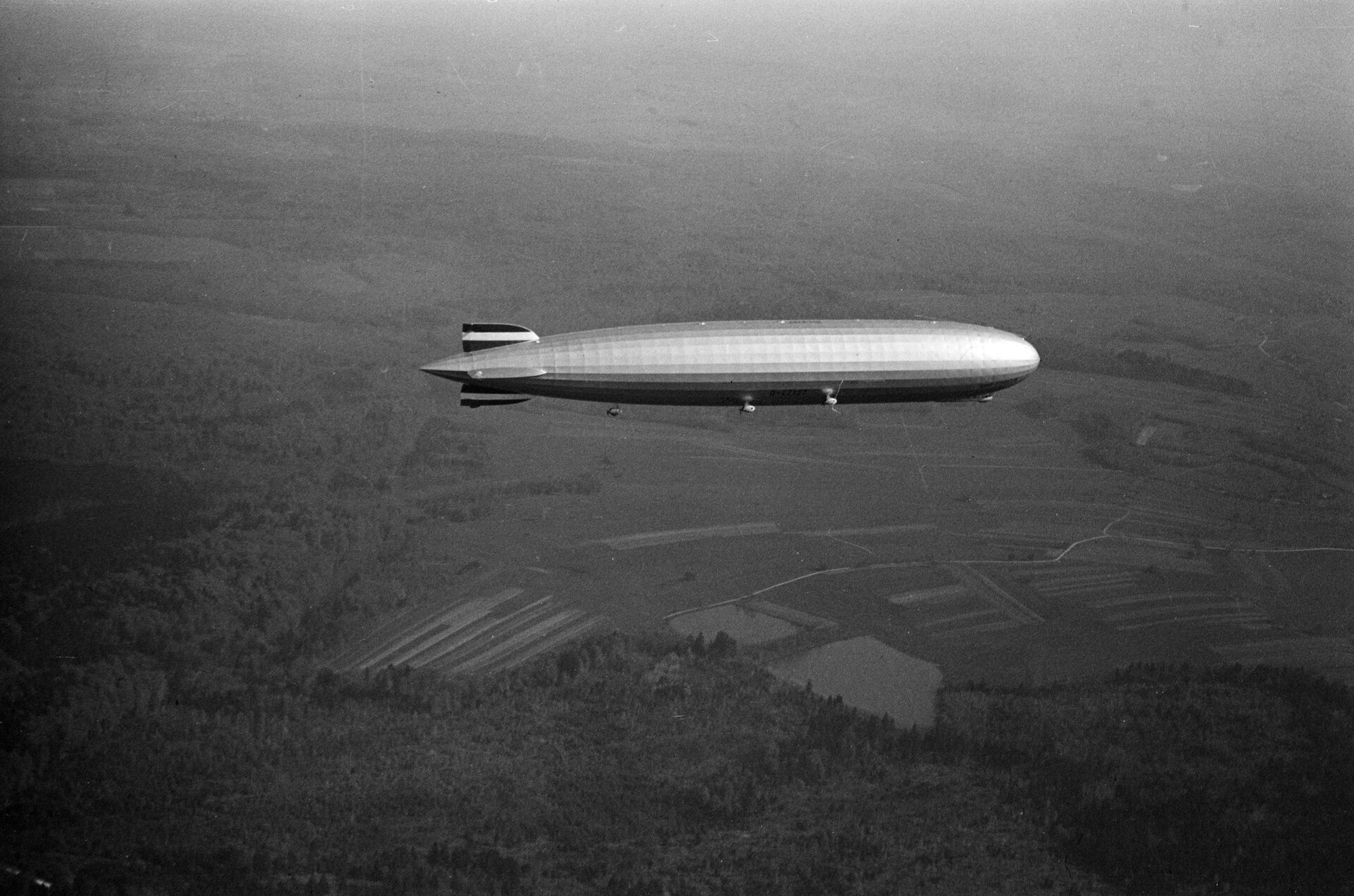
Its most famous voyage was a round-the-world flight between 7 August and 4 September 1929. In July 1931 it flew to the Arctic on a trip that was both a scientific expedition and a public demonstration of what an airship could do in harsh conditions. Its lift came from hydrogen.
Lakehurst, 1937: The Hindenburg Disaster#
LZ 129 Hindenburg, 245 metres (804 feet) long, was the first airliner to offer regularly scheduled service between Europe and North America (Airships.net). On 6 May 1937, while landing at Lakehurst, it caught fire and was destroyed.
The disaster brought the age of the rigid airship to an end. It also fixed one lesson in place for every later designer: the lifting gas matters as much as the structure.
Helium Versus Hydrogen#
Hydrogen is the lightest gas and is cheap and easy to produce. Helium lifts slightly less: about 93% of hydrogen's lift at full purity and roughly 88% in practice, according to Airships.net. Its great advantage is that it does not burn. Its drawback is that it has always been scarce and expensive.
The Hindenburg had in fact been designed to operate with helium, but it flew on hydrogen. Grossman notes that America's ban on helium exports predated the Nazi era and stemmed from scarcity: in the 1920s the country did not have enough helium for its own needs.
Today helium is the norm. LTA Research says that its Pathfinder 1, like most modern airships, uses non-flammable helium, and the Zeppelin NT, Airlander 10 and the planned LCA60T cargo airship all use it too. Even so, helium supply is part of the engineering problem: LTA lists the sustainable management and containment of helium among the things Pathfinder 1 is testing.
The Modern Revival: Zeppelin NT and Airlander 10#
The Zeppelin NT#
The name never quite disappeared. The Zeppelin NT made its first flight on 18 September 1997, according to the operator's technical data. It is a semi-rigid design: a 75-metre helium envelope supported by an internal structure of twelve triangular carbon-fibre frames, aluminium longerons and aramid cables. Three 200-horsepower engines give it a top speed of 125 km/h, and it carries two pilots and up to 14 passengers.
Deutsche Zeppelin-Reederei flies sightseeing trips from Friedrichshafen over Lake Constance and from Essen/Mülheim over the Ruhr. In April 2026 FlightGlobal reported that seats sell quickly in the airship's home town, even though the type has had limited success abroad. The design also lives on in advertising: the Airship Heritage Trust lists three Zeppelin NT airships operated by Goodyear in the United States, and LTA Research points out that today's Goodyear "blimps" are technically semi-rigid airships.
Airlander 10#
Britain's Hybrid Air Vehicles (HAV) takes a different approach. Its Airlander 10 is a hybrid aircraft: according to the company, most of its weight is carried by helium buoyancy, with the rest coming from aerodynamic lift and vectored thrust. Its four engines currently burn jet fuel, and HAV plans to replace them progressively with electric motors, aiming for all four by 2030.
The programme has attracted interest but has not yet produced a certified aircraft. Aerospace America reported that HAV began type certification in February 2024 and chose a site near Doncaster for a factory planned to build up to 24 aircraft a year. Spanish airline group Air Nostrum reserved ten Airlander 10s in 2022 and later doubled that to twenty, according to the Majorca Daily Bulletin. In October 2025 an undisclosed defence contractor reserved three aircraft, alongside a further US$2 billion in civil reservations (Shephard).
HAV's 2026 announcements have centred on an operational-testing milestone in May, a memorandum of understanding with Spanish company Defentia in July and a planned joint venture with WepTac to offer surveillance aircraft to the US military in September. None announced a flight by a production aircraft.
Pathfinder 1: The Rigid Airship Returns#
The most tangible progress is happening in California. LTA Research's Pathfinder 1 is a 406-foot (about 124-metre) rigid airship: like the classic Zeppelins, it holds its shape with an internal skeleton. Aerospace America described it as the first rigid airship built in 85 years, using advanced materials including carbon fibre and diesel-electric propulsion. Twelve electric motors provide thrust and steering, and the test programme includes LiDAR and other sensors (LTA Research).
Its progress has been deliberately incremental. Pathfinder 1 made its first untethered outdoor flight at Moffett Federal Airfield in October 2024, flew beyond the Moffett airspace over San Francisco Bay in May 2025, had its flight-test area expanded in October 2025 and received an exhibition airworthiness certificate in December 2025 (LTA updates).
Flying Whales and the Cargo Dream#
The boldest commercial vision comes from France. Flying Whales is developing the LCA60T, a 200-metre rigid airship designed to carry up to 60 tonnes of cargo, according to the company's FAQ. About 200,000 cubic metres of helium in 14 gas cells would provide lift, and a hybrid system of a turbogenerator and batteries would power 32 electric motors. The company estimates that full development will cost €550–600 million.
Its schedule has already moved. The FAQ still targets a first flight in 2027, an EASA type certificate by late 2028 and commercial operations from 2029. But in October 2026 Dealroom reported that a €90 million funding round led by shipping group CMA CGM had come in below the €105 million-plus originally expected, partly because Québec did not reinvest. The same report said component assembly at the Laruscade plant near Bordeaux is expected in early 2028, with a first test flight targeted for the end of that year.
| Programme | Type | Lifting gas | Status as of October 2026 | Stated target |
|---|---|---|---|---|
| Zeppelin NT | Semi-rigid | Helium | In service for sightseeing and advertising | — |
| Airlander 10 (HAV) | Hybrid | Helium | Certification work, testing, reservations; no production aircraft flight announced | Operations in Spain before 2029 |
| Pathfinder 1 (LTA Research) | Rigid | Helium | Flight testing; first off-base landing on 27 October 2026 | Data for larger future airships |
| LCA60T (Flying Whales) | Rigid cargo | Helium | Factory preparation; €90M raised October 2026 | First test flight end of 2028 (reported) |
Other ventures are also active. Aerospace America's 2024 review noted that China's multipurpose AVIC AS700 airship had made its first ferry flight, with 18 on order, and that Goodyear opened a European airship base at Mülheim/Essen in Germany that May.
Conclusion: A Niche, Not Yet a Revolution#
The airship never really vanished; it shrank into niches such as advertising, tourism and research. What is new is a rigid airship flying again and serious money chasing cargo and regional transport.
In The Kármán Line's assessment, the evidence so far supports airships as specialist tools rather than a replacement for aeroplanes. The Zeppelin NT shows that small airships can find steady work in tourism and advertising, and Pathfinder 1 shows that a large rigid airship can be built and flown again with modern materials and helium. Whether big airships can earn their keep commercially, carrying 60-tonne loads or regional passengers, will only be clear once a production aircraft is certified and in service. None of the new large-airship ventures has reached that point yet.
The Graf Zeppelin showed how far and how reliably an airship could fly. The loss of the Hindenburg, and of the 36 people who died at Lakehurst, showed the price of a flammable lifting gas. Today's designers have absorbed that second lesson by building around helium. The coming years will show whether they can also recapture the first.